Can you tell us about your early life in Sardinia, growing up in Sorso, and how the island’s culture, landscapes, and community shaped your creativity and identity as an artist?
Being born in a small town in Sardinia in the 1980s, specifically in 1980, was beautiful in many ways. My parents were wonderful, I have always had a great relationship with my brother, and nature, the closeness of the sea, and that ever-present horizon were all fundamental to me.
The difficult part was that living on an island, especially in those years, despite its extraordinary natural beauty and deep cultural roots, could also be very hard. There was literal isolation, but also the narrow-mindedness that often comes with provincial life. I always felt different from the people around me, and that difference was pointed out to me very early by classmates and friends.
I never spoke the local dialect, and I was always strongly drawn to drawing and music. My grandfather painted, my mother still paints, and my uncle was passionate about both photography and painting. I was shy, a little chubby, and what might seem completely normal today did not feel normal at all back then. I felt that sense of isolation very deeply.
In the 1990s, being so connected to music and to grunge culture made it even harder to live within a society that, from my point of view, felt closed and limiting. That is why I often speak about my homeland in terms of both love and hate. As soon as I could, I left, because I needed to discover other realities and fully express who I really was. At the same time, I think those very limitations gave me the drive to push further, refuse to settle, keep searching for new solutions, and give form to what I had always carried inside me.
Do you have an early memory of when you first started behaving like a creative person, even if you did not realise it at the time?
Honestly, I always knew. Even as a child, I was “the one who was good at drawing” and also “the one who was good at playing music.” Nothing extraordinary, but compared to the average, I stood out. I have always been strongly drawn not only to art in general, but also to technology.
As a kid, I was lucky enough to have a Commodore 64, and I would spend hours not just playing those beautiful 1980s games on cassette or cartridge, but also messing around with BASIC. In truth, I was copying lines of code without ever fully understanding them, but the fascination was already there.
Later, I became obsessed with music, which was my first real form of expression. I would spend hours rewinding and replaying cassette tapes, trying to reproduce chords, arpeggios, and solos. That helped me develop a good ear. Back then there were no tutorials. At most, there were guitar courses sold at newsstands, private lessons, or the conservatory, which I never wanted to attend because I have never liked imposed structures.
Alongside computers and music, I was always drawing. I was never a genius at any of these things, but I was deeply attracted to all of them. Photography came later.
You left the life of a small town in Sardinia for Perugia in 2001, and then moved to the fast-paced city of Milan in 2009. How did those shifts, from a close-knit island community to increasingly large and dynamic urban environments, shape your view of life, creativity, and personal growth? Did it feel more overwhelming or more liberating?
For me, having the chance to leave my hometown was a dream from the very beginning, because I felt deeply limited and judged there. That sense of limitation turned into a form of rebellion, and at a certain point in my life that rebellion became quite extreme.
When I moved to Perugia to study computer science, I basically went a little crazy. I felt a sense of freedom that I can still feel now every time I think about it, and it led me to do everything except study. I wanted to enjoy that freedom completely, and I pushed everything to the limit, from my appearance to my lifestyle, all the way to becoming a street performer, singing and playing with some close friends around Italy.
That experience gave me a lot, and I still speak about it with great pride. There were moments of absolute freedom and joy, but also very hard moments. It reached a tragic point with the overdose death of a friend. After all of that, I went back to Sardinia for a kind of reset, and then I started over in Milan with my partner, carrying a huge amount of life experience with me.
In Milan, I discovered a different kind of freedom, together with the commitment it takes to build what I am today and what I am still building. A multicultural city like Milan gave me a great deal. It is where I built my career, first as a photographer and now as an AI artist. Its intense and constant cultural life has been, and still is, fundamental for me. It expanded both my view of the world and my sense of what my work could be.
Do you remember the first camera you ever received? What drew you to photography as an art form?
It was during my years in Perugia. My friends gave me, I think for my twenty-third birthday, although I am not completely sure about the exact date, a Nikon F55, obviously a film camera. That was my first real encounter with photography. But it was only in 2008, thanks to my partner, that I truly moved closer to the medium and bought a digital Nikon D80.
My relationship with photography was professional and reportage-driven almost from the start. I never really managed to develop a true personal artistic research practice through photography, because it almost immediately became a profession and left me very little time for that kind of exploration. At the beginning, I wanted to become a reporter. I even worked in photojournalism for a couple of years for a Milan-based agency, but eventually my core business became commercial stock photography.
I was lucky enough to study photography from 2009 to 2011 at CFP Bauer in Milan, where I now teach AI applied to photography. Bauer, with its academic, cultural, and conceptual approach, taught me a great deal. All of that eventually led me to find in AI my true expressive form. As I often say, in the same way that the arrival of photography once gave some painters a new medium through which they could finally express themselves, I felt something very similar with AI.
Who are your main artistic influences?
In photography, some of the artists I love most are Roger Ballen, Alec Soth, and Martin Parr, but in truth I am influenced by everything around me: films, music, TV series, books. More recently, I have been especially influenced by two beautiful books by Valentina Tanni, Exit Reality and Conversazioni con la macchina.
My memory is very visual, almost photographic. I have seen countless films, photographs, and comics, but I have a terrible memory for names. I am not someone who likes to constantly cite references, but everything stays very clearly in my mind.
When did you begin experimenting with AI in your creative process? Do you have a specific method or ethos in the way you use AI tools?
My creative process is closely tied to technology. My research evolves alongside existing AI systems and the way they improve. I have the opportunity to test almost all of them because I am a tester for OpenAI, Kling, Runway, and others. That allows me to experiment continuously.
My first real experiment dates back to a version of Midjourney from November 2022. I do not remember exactly whether it was v3 or v4. For me, it felt almost magical to see an image appear after writing a prompt. At first my approach was very photographic, but very soon I understood that I could finally go beyond that.
I would not describe my process as rigid. It is more like organised disorder. I do not know whether it is visible in my work, but in my personal projects I keep moving further and further toward chaos, randomness, and serendipity. I love unwanted effects, and my work often consists in bringing them together and giving them meaning. Sometimes I start with an idea, and other times it is the result itself that suggests the meaning.
If we compare the arrival of digital cameras, which some people described as the death of photography, with the rise of generative AI today, where do you see the strongest parallels and the clearest differences in the way creators have responded?
This debate began long before digital cameras. In fact, it began with photography itself. People such as Paul Delaroche and Charles Baudelaire were worried that photography might mean the death of painting. From an artistic point of view, I believe every new medium simply opens up new expressive possibilities.
With AI, I see many parallels with photography. We have a technological medium through which we can represent reality, interpret it, or distort it. There is also something psychologically similar in the way the image appears. In a certain sense, seeing an AI-generated image emerge still reminds me of watching a Polaroid develop.
If I had to point out a real difference, I would say that today the speed and the scale are far more extreme. AI is advancing much faster and touching many more fields at once. But on a human level, I do not see such a huge difference in the reactions. I see people who are worried, often quite rightly, about losing work, and I see people like me who threw themselves headfirst into experimentation, research, and the effort to understand this new medium.
How do you see AI evolving within the art world? Do you think AI tools will become as common as Photoshop? Even if they expand creative possibilities, are there any risks artists should be mindful of? And how do you imagine the next ten years in terms of artistic creation and collaboration?
I do think there may be a real problem this time, or at least that is my feeling. Over time, both the number of makers and the amount of output have grown enormously. In the nineteenth century, very few photographs existed. Then photography gradually became more accessible to artists, professionals, and amateurs. Kodak widened that access, then came disposable cameras, then smartphones. Today, literally anyone can create, at the current level of these technologies, not just images but entire short films.
So yes, I think AI tools will become as common as Photoshop, perhaps even more so. On one hand, this democratisation allows everyone to express themselves. On the other, it raises the baseline and floods the world with content. The speed of development, driven in part by AI itself, is creating such extreme acceleration that we as human beings may struggle to keep up with it. The risk is a level of saturation we have never seen before.
For that reason, ideas will become more important than any technical aspect. The problem is that having truly original, innovative, and unique ideas at this speed will become more and more difficult. At the same time, those who know how to ride this wave will have a huge advantage, because AI allows you to create almost anything you can imagine.
Honestly, I cannot even begin to imagine what might happen in ten years. At this pace, things that seem almost unthinkable today could become reality, especially if we consider how much has changed in just the last four years.
Your Instagram profile, @katsukokoiso.ai, began as an anonymous experiment at the end of 2022 and has grown to more than 330,000 followers. Social and entertainment platforms increasingly shape our creative decisions, for example, music gets shorter to maximise streams on Spotify, and visual work is often made vertically or in square formats to fit Instagram's rules. What has your relationship with Instagram and social media been like in this context? Do you feel more liberated by it, or more constrained?
Instagram has been fundamental for me. Even though the profile started as an experiment, it grew entirely organically because of the huge interest and curiosity surrounding these new aesthetics, especially between the end of 2022 and 2023. At that time, everyone was asking what these images were, whether they were real, and where they came from. So people started following me while I was simply doing what I still do today: experimenting and showing what I was making.
Through Instagram, the first collaboration opportunities arrived, and from there international attention kept growing. Around my work, a community formed that includes not only the general public and professionals in the field, but also artists, musicians, directors, actors, and people with significant cultural influence.
So I absolutely recognise how important the platform has been, even though I also know that in some ways we are forced to adapt to it. Most of my work is vertical because it performs better on Instagram, although it is also a format that works very well in exhibitions. Over time, I have realised that this close relationship with social media can also become frustrating, especially when the numbers do not match expectations.
I keep working without chasing what the algorithm wants. I continue to publish what comes out of my artistic research through AI. I think the key is to find a real balance: using social media to make your work visible without distorting yourself in the obsessive pursuit of likes and views. In my case, everything happened very naturally and without a precise strategy, probably because the interest was genuine, both in the new medium itself and in the fact that I managed to build a recognisable aesthetic, something distinct, made of images that almost always push the viewer to ask questions. So yes, overall it has been liberating, but only as long as you do not let the platform rewrite your voice.
Your work often blends nature, human beings, and technology in surreal and sometimes dystopian ways. What inspires these fusions, and what do they say, in your view, about the human condition?
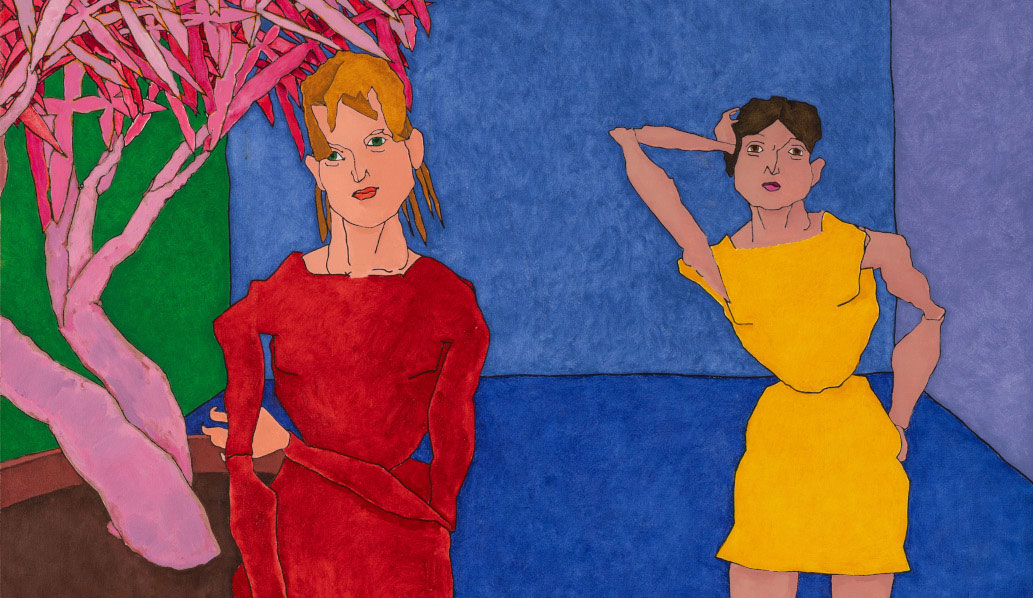
What AI finally allowed me to do was express what I wanted with almost no limits. I began by representing difference through a visual language that was still very close to photography, but I immediately felt the need to go further and also embrace the flaws and hallucinations of AI, pushing them further and further.
Today we can investigate the medium itself and explore new aesthetics with very few limits, while also applying that freedom to deeper questions. In my case, those questions are about our existence, loneliness, and our relationship with technology. I believe we are already living inside a dystopian world. We are in it. Black Mirror has become real, and that entered my research very naturally.
I am inspired by our own existence in this historical moment, which is exciting, complex, and difficult all at once, by our instability, our fragility, the possibilities in front of us, and also the social isolation that comes with hyperconnectivity. To be honest, I do not have an optimistic view of the future, and that inevitably shapes the way I express myself. It is simply the natural consequence of how I look at the present.
Do you have a career highlight that particulary stands out to you?
I have to admit that in just over three years, since I began experimenting and expressing myself through AI, almost everything has felt like a highlight. I have exhibited internationally, two of my works were shown in a museum in Japan, and over time my path has led to talks, travel, interviews, international invitations, and collaborations with very different companies and figures, including OpenAI, Bi-2, Lenovo, Oovie Studios, La Fil Filarmonica di Milano, Capo Plaza, Steve Aoki, Stefano Sollima, and many others. There are also a few projects I am working on now that I still cannot talk about, but that already feel like an important part of the phase I am currently living.
At the same time, I do not feel I have arrived anywhere, and I still do not think there is one single work of mine that stands above all the others. Every day of my artistic and professional life is a continuous search, often a difficult one, a constant dialogue with doubt and with the feeling that I have never truly arrived. But if I try to look at myself from the outside, I cannot deny that I have lived through some very intense experiences, and perhaps the most honest thing I can say is that I still feel I am only at the beginning of an important journey.
Finally, can you tell us about the name Katsukokoiso.ai, what it means, and why you chose it to represent your AI work?
This may be a disappointment, but the name was born completely by chance, even though it ended up making sense. Since I thought it would only be an experiment and I wanted to remain completely anonymous, I used a random name generator.
I deliberately chose a Japanese female name because I wanted it to be my exact opposite, given that I am a Sardinian man. Looking back, I think it was, even unconsciously, a smart choice, because even now many people still wonder who I really am. After the profile took off, I decided to keep it, and today it is an integral part of my artistic and professional identity.
This edition of our monthly cover artist interview series is the first from our special collaboration with Red Eye. We’ll be teaming up for more select cover stories to co-curate and co-direct the artist selection, theme and cover design – uniting our shared passion for spotlighting new and unique stories from artists within the digital realm.