You grew up in Prince George's County, Maryland. Can you paint a picture of your early surroundings and community? How did the environment there first spark your sense of creativity or love for visual expression? Were there any specific artists, cultural moments, or personal experiences in your early life that planted the seeds for your creative career?
Growing up in Prince George's County, specifically Landover, was an interesting, beautiful experience. On one hand, the county is known for its high concentration of Black wealth. At one point it was the wealthiest Black county in America, and it might still be. But that wasn't my reality. I couldn't do what everyone else did, couldn't wear what everyone else wore or go places that everyone else went to, so I held a lot of tension around that. At the same time, I was surrounded by a community that showed me what was possible. I could see it. I knew things could happen. I just had to move out of my own way. Growing up there gave me a baseline understanding that Black life is full, textured, and worth documenting. I didn't have language for that then, but I always felt it. Creativity for me started as observation, watching how people put themselves together, how they moved, the care they took in how they presented to the world. That's beauty. That's art. I just didn't know yet that I was going to dedicate my life to it. My county made me stand proud and I will always appreciate that.
What first drew you to makeup artistry, and how did your move to New York City transform that passion into a full career?
If I really remember it clearly, my mother was the flyest person you'll ever meet. Those early pictures of her looking like she walked off a runway definitely educated me subconsciously. What really drove me specifically to artistry was that I wanted to take a hiatus from college but I didn't know what to do, and I knew my mother wasn't going to allow me to just stay home. I remembered that people had always complimented my makeup growing up, so I decided to see if I could get a job at the MAC counter. I had no professional experience but I had sales experience, which at that time was very important. I went and applied and actually got the job. That was the first step. I started getting down to the technical side of makeup from learning every day at the counter, and then I started casually flipping through magazines wondering how I could get my name in the credit line. I went searching and happened upon a class called "Packaging Your Portfolio" by Crystal Wright. I took her class and the rest is history. I immediately knew that NYC was the place for me. I had to go there to get to the next level, to see my name in a magazine, to work in fashion. Once I knew that, I started making plans. The city gave me access to a world I'd only seen in magazines, and then suddenly I was inside those pages.
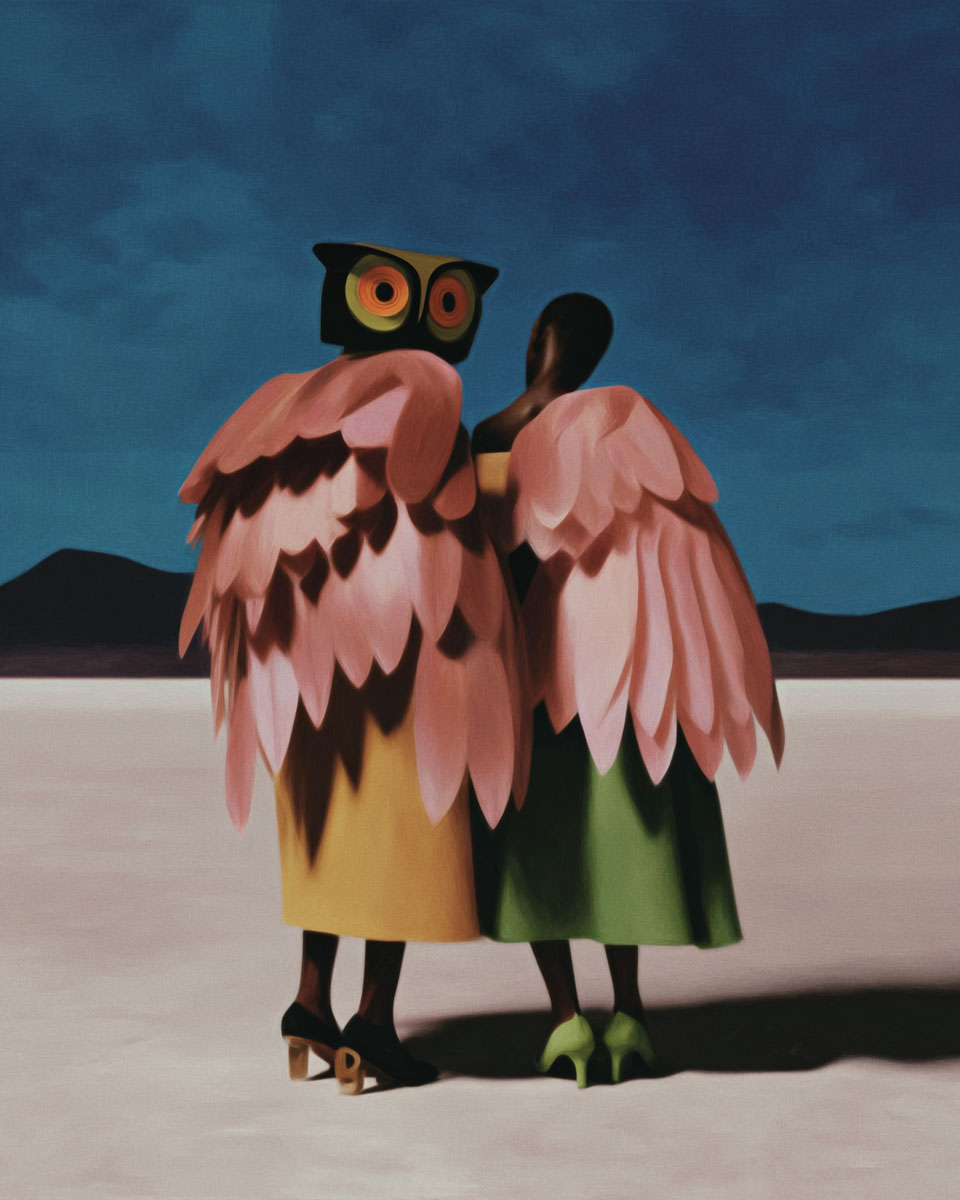
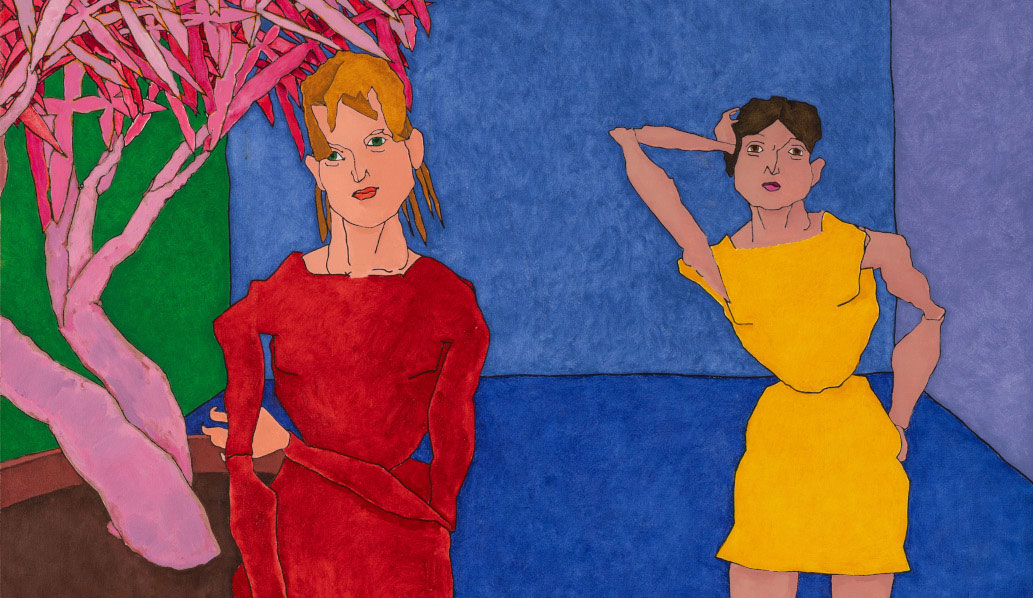
Lavendar Dreams. Availbale to collect through MoAa
Looking back on those years working in New York on projects like New York Fashion Week for houses like Valentino and Oscar de la Renta, and shooting for Italian Vogue and V Magazine, what stands out as the most formative moments or valuable lessons from that time?
What stands out most isn't the fun beauty I was able to create. It was the discipline. That world is exciting but also very cutthroat and exacting. There's almost no room for self-doubt. Working at that level (as an artist or an assistant) taught me that artistry without business acumen is just a hobby, and I wanted it to be a business. So you have to have both. I also learned how to hold myself in rooms where people assumed things about me before I opened my kit. You develop a quiet confidence. You let the work speak, and then you let it speak loudly enough that the room has to reckon with it. But I was also very shy, and in the fashion world you absolutely cannot be, so I struggled a lot with gaining a footing. Though I found success in some ways, I could have really made some noise had I just believed in myself a bit more.
Early in your career you were often the only Black artist on set. How did those experiences shape both your artistry and your drive to create more inclusive spaces in beauty?
It shapes everything and nothing at the same time, and I mean that seriously. It sharpened me. When you're the only one, you can't have an off day. You're not just representing yourself; you're being read as a representative of an entire category of person, which is an unfair weight to carry but a real one. What it gave me was a very clear understanding of what absence costs. When you're not in the room, decisions get made without your eye, your hand, your cultural knowledge, and the beat moves on. That absence shows up in the work. There was also a situation early in my career where something deeply racist was said to me, and I really do think it affected the rest of my career because I couldn't stop thinking about it. It caused so much anger and doubt and made me question my place in that world in ways I'm still unpacking. That's part of why The Future in Black exists. Not as a reaction to exclusion, but as a construction of something that should have already been there.
Can you take me back to your first journey into exploring digital tools for creating art? What initially drew you to experimenting with them?
It really began out of necessity. After twenty years as a makeup artist, forty-plus Fashion Weeks, luxury brand campaigns, editorial work, I was diagnosed with rheumatoid arthritis. And that diagnosis changed everything. The physical demands of the work, the way you hold a brush, the pressure in your hands, the hours on set, my body just couldn't sustain it the way it used to. I had to retire from doing physical makeup and figure out what came next. I wasn't ready to stop making things. That's not in my DNA. So I started exploring digital tools as a way to stay in the creative conversation, and that exploration eventually led me to AI. What I found was that everything I had spent two decades building, my eye, my sense of color, my understanding of how light moves across skin, none of that went anywhere. I just needed a new material to work with.
You've described AI as a new 'creative material,' and you've shared that you turned to it partly because of a condition affecting your hands. Do you remember your very first experiments with the technology? What were you creating in those initial moments? And looking back, did you immediately recognise AI as a powerful tool for enabling and expanding human creativity, or did it take some time and experimentation before its true potential clicked for you?
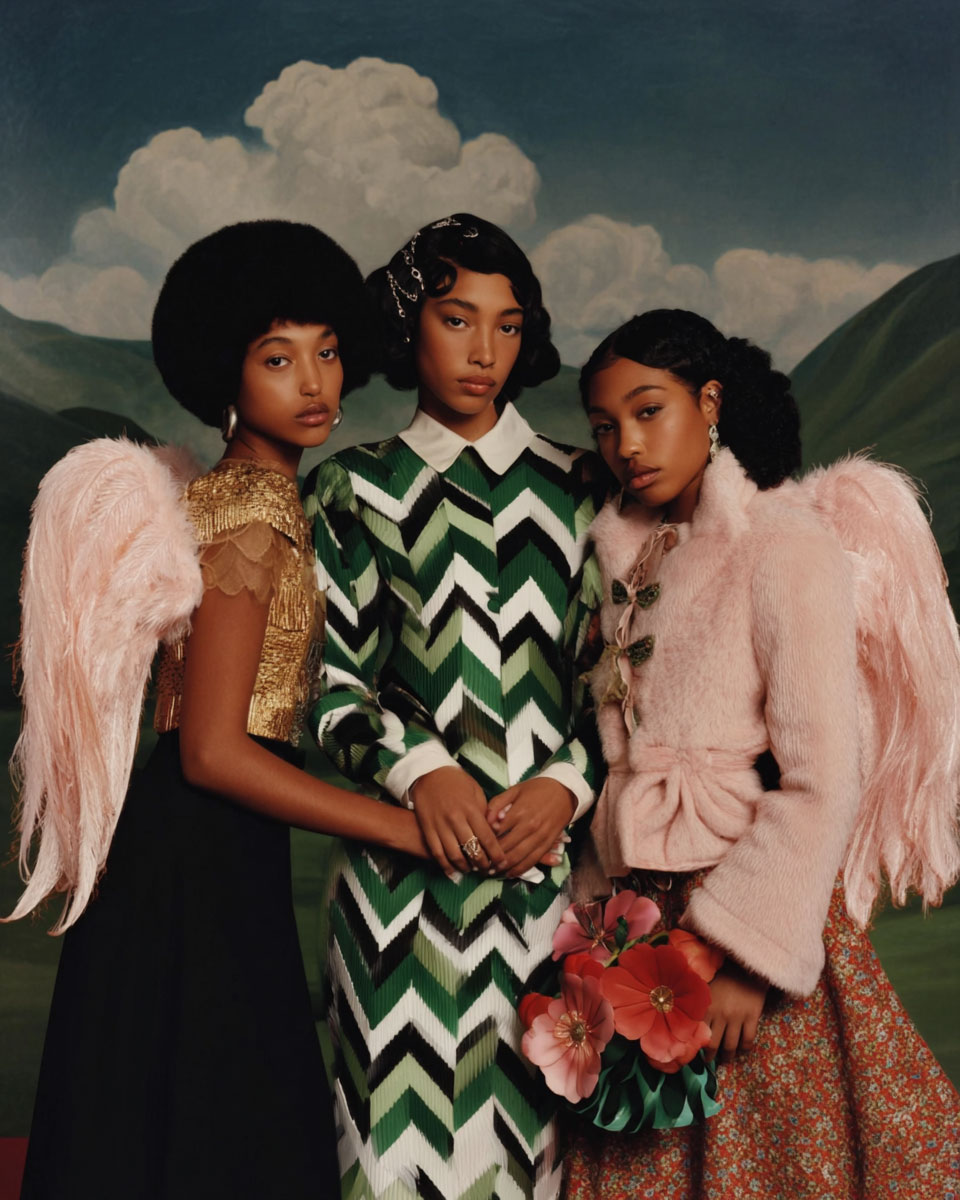
I sure do. I made a campaign that reimagined Black beauty ads from the 70s, and that's when this world opened up for me and I saw the potential. It was the first time in a while that I had made something and not felt the shadow of limitation over it. My hands had been making decisions about what I could and couldn't create, and suddenly that conversation was over. The technology didn't replace my artistry. It freed it. What I recognized immediately was that everything I'd spent twenty years developing, my eye, my sense of color, my understanding of light on skin, my cultural references, all of that was still very much the engine. AI was just a new way to let it bloom. It didn't take long for me to understand that this was serious. This wasn't a workaround. This was a practice. And I enjoyed every bit of it. It also made me even more creative.
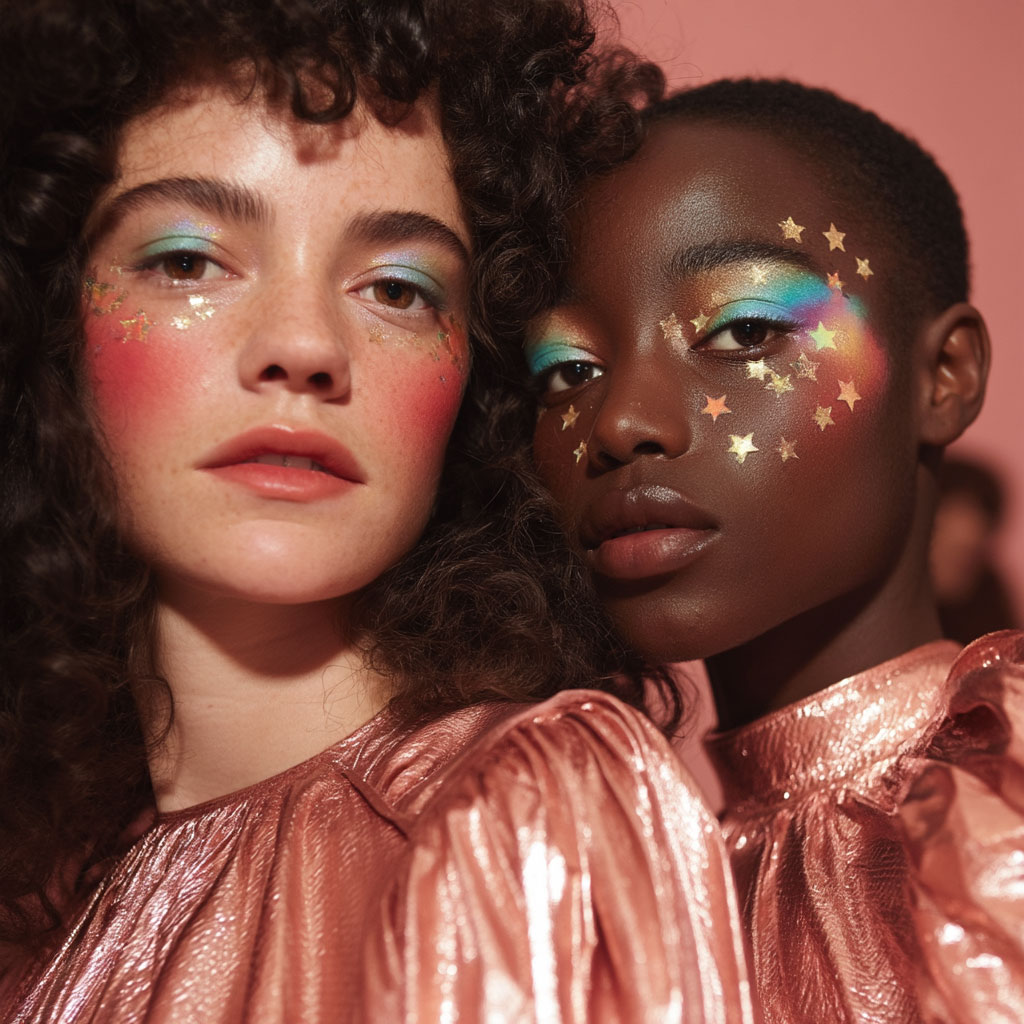
How does working with digital tools compare to the tactile, hands-on process of applying physical makeup? In what ways do you see your earlier career as a makeup artist still influencing your digital artwork today?
The tactile work is relational in a way that's hard to replicate. You're in physical proximity to another person, responding in real time to how light falls, how skin responds. Digital work has its own kind of intimacy, but it's internal. You're in dialogue with your own vision rather than someone else's face. What my makeup career gave me is irreplaceable though: twenty years of studying how light interacts with melanin, how color reads at different depths of skin, what beauty actually looks like on Black faces when it's not being filtered through someone else's aesthetic framework. All of that is alive in every piece I make. You can't train that out of me and I wouldn't want to.
Tell me about The Future in Black. What motivated you to start it and what is its core mission today? How has the studio grown since you launched it? And specifically with AI, how central is the technology to achieving that mission, and in what ways does embracing these tools make your broader vision of empowering Black creatives more achievable and scalable?
The Future in Black started from a very simple and very stubborn belief: that Black imagination isn't reacting to the future, it's building it. The studio exists at the intersection of cultural intelligence, AI artistry, and storytelling. We make work that gets shown internationally. We consult with luxury brands who want genuine cultural fluency, not a diversity checkbox. We facilitate workshops, produce media, and build immersive experiences. The throughline in all of it is that Black creativity deserves to be treated as the sophisticated, world-shaping force that it is. AI is central to that mission because it's a starting point and allows us to scale things that would otherwise be constrained by access and resources. When I can make an internationally exhibited artwork from my studio using tools that are increasingly accessible, that changes who gets to participate in conversations about the future. People start building their own tables instead of being gatekept out of everyone else's.
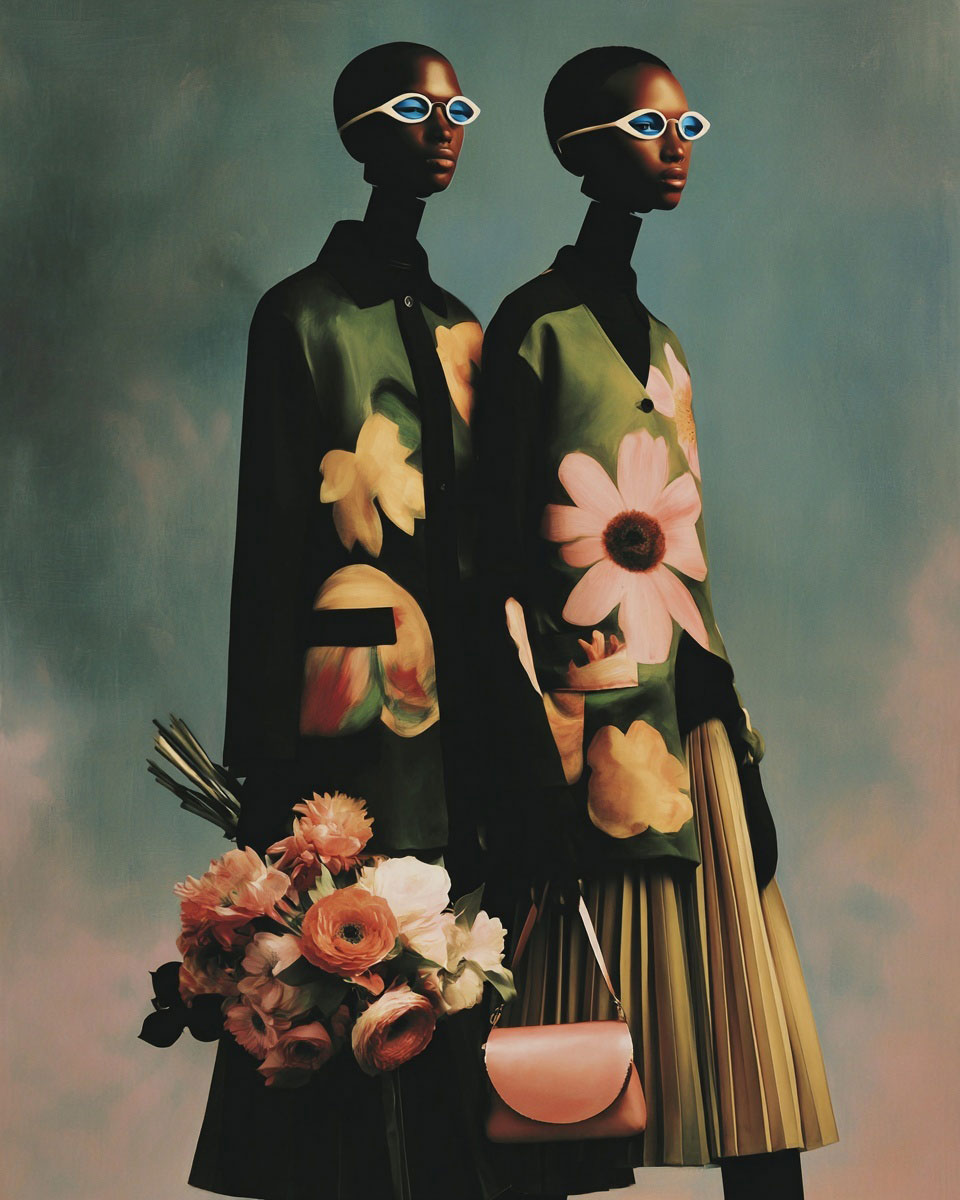
You've emphasised the importance of enabling play for Black creatives in your writing. Can you expand on that? How has embracing play influenced your own work? What inspired the Play Play Workshops? What do you observe when creatives are truly allowed to just play?
As Black creatives, a lot of the time we don't get to just play or have fun without a goal attached to the end of it, and that can be really heavy. Play is where you find out what you actually think, what you're actually drawn to, before the world tells you what you should be making and monetizing. For Black creatives specifically, there's so much pressure to produce work that justifies itself, that explains, that educates, that advocates. And that work matters. But if that's all we're allowed to make, we're being robbed of an entire dimension of creative life. Play as Practice™ is my answer to that. It's the philosophical core of everything I do, and The Play Play workshops are the public articulation of it, a space where you come with no outcomes required, no deliverables, no justification. What I've seen in those sessions is that people exhale and go into a state of wonder. They get to just create with no boundaries. They didn't know they'd been holding their breath. And what comes out of that exhale is extraordinary.
You've recently spoken out against gatekeeping and 'othering' in creative communities, particularly around AI in art, where people treat work as illegitimate or 'not real' just because AI tools were involved. Can you elaborate on that critique? What are some of the negative implications you've seen this have on creatives?
When people say AI art isn't "real" art, I want to ask them: real by whose standard? This is the same conversation that happens every time a new tool enters the creative space, and it is almost always aimed at the people who needed that tool most, the ones who were already being excluded. What I've seen is that gatekeeping around AI falls hardest on artists who don't have institutional backing, who can't afford traditional materials or training programs, who were already navigating a creative industry that wasn't built with them in mind. To then tell those artists that the tool they found, the one that opened a door, is somehow lesser, is not a critique of technology. It's a continuation of exclusion dressed up as an aesthetic principle. And I really think the accessibility angle isn't being addressed enough. Those people (myself included) are being totally forgotten in this conversation. This tool saved me. It allowed me to get my creativity out in a way I couldn't do it physically anymore, and that changed my life.
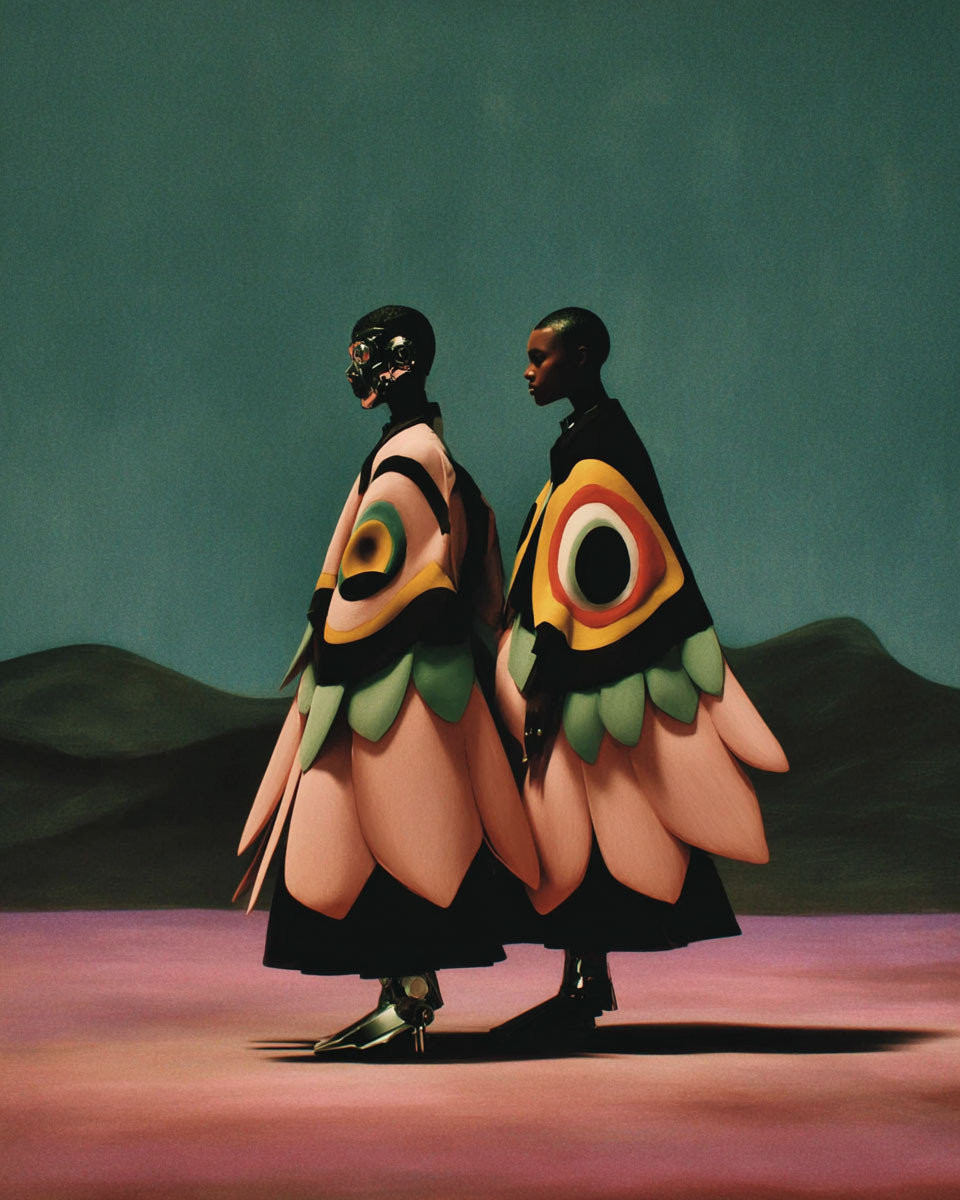
What's your take on the criticisms of using AI in creative work? Do you see echoes of how photography was criticized when it disrupted traditional art? Are there any concerns that you share with the critics? How do you see the technology and its relationship with the art world evolving in the future?
The photography parallel is real and worth sitting with. Every generation has its version of "that's not really art," photography, digital design, sampling in music. And every time, the panic is less about the tool and more about who gets to define legitimacy. That said, I don't dismiss all of the concerns. There are real questions about authorship, about the data these models are trained on, about what gets erased in the process of building these systems. I hold those questions seriously, and honestly that's part of why I got into the conversation about it. What I won't do is let those legitimate conversations be weaponized against artists who are simply trying to make work and be seen. The art world will reckon with AI the way it always reckons with change, slowly, reluctantly, and then suddenly as if it was always obvious. And in the meantime, people are missing out on some of the most extraordinary creatives I've ever encountered. I've seen work that will blow people away. We cannot allow anyone to bully those artists into silence.
Can you tell us more about upcoming projects that our readers should look out for?
I have work being shown internationally through my representation with the Museum of Artificial Art. I'm deep in development on several grant projects, including The Portal of Black Joy, an installation concept that I think is going to be one of the most significant things I've made. And I'm always making. Always in the studio.
We're also actively looking for partnerships with people and organizations who genuinely see what we are building here. Not just what it looks like on the surface, but the depth of the vision. That matters to us. And I'm stepping more intentionally into the speaking space, bringing these conversations about Black creativity, AI, and culture to bigger rooms and broader audiences.
The long vision for The Future in Black is a cultural institution. Something that doesn't just respond to the future but helps shape it. A place where Black imagination is centered, celebrated, and resourced in a way that is permanent and lasting. We are building toward that every single day.
What I want people to hold onto is this: joy is not the absence of struggle. It's a practice. It's something you build deliberately, in the middle of everything that's trying to redirect you toward grief. That's what my work is about. That's what The Future in Black is about. We are not waiting for permission to imagine what comes next.
This edition of our monthly cover artist interview series is the first from our special collaboration with Red Eye. We’ll be teaming up for more select cover stories to co-curate and co-direct the artist selection, theme and cover design – uniting our shared passion for spotlighting new and unique stories from artists within the digital realm.
Learn more about Joy Fennell's projects here.