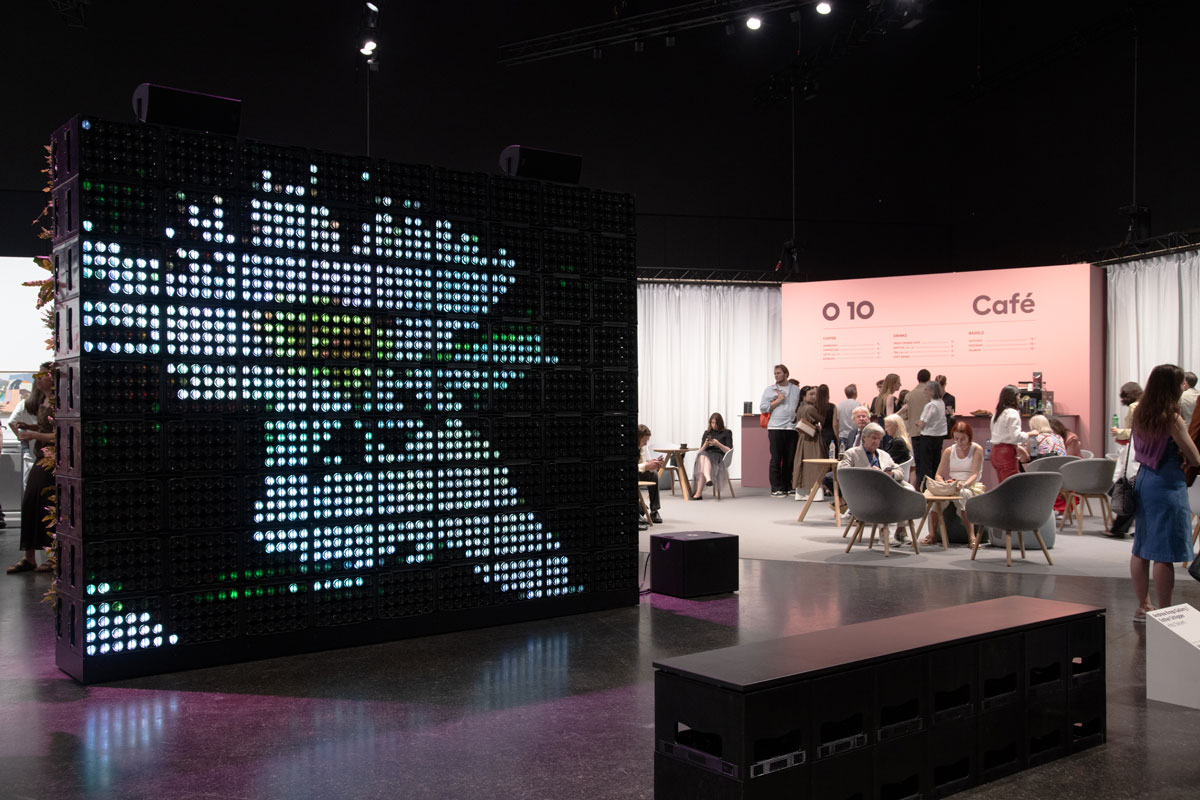
The core idea behind Digital Masterpieces: From Code to Canon is that the history of digital art cannot be separated from the history of technology itself. The presentation shows how computing centers, university labs, industrial research facilities, and major technology companies have long been closely connected to artistic practice. Institutions such as Bell Laboratories, the Technische Hochschule Stuttgart, NYIT, Xerox PARC, MIT, and later Google and NVIDIA have played an active role in shaping this history, not just as technical backdrops but as key participants.
Rather than attempting a complete overview, the exhibition takes a deliberately canonical approach. Each of the seven chapters focuses on works that have had a clear and lasting impact on the development of digital art. ArtMeta acknowledges that important areas, such as virtual reality, gaming, and interactive art, are only touched on at the margins. The exhibition is structured into seven chapters: SIGNAL, SYSTEM, GRAPHIC, NETWORK, GENERATIVE, INTELLIGENCE, and PROTOCOL. These chapters trace the evolution of digital art in parallel with the technological infrastructures that made it possible, moving from early experiments with electronic signals and algorithmic graphics to today’s AI and blockchain-based practices.
What Makes a Work Canonical? ArtMeta’s display and its accompanying catalogue explore what gives certain works lasting importance in digital art history. There is no single formula, but several recurring factors stand out:
Cultural impact: Some works gain influence quickly by capturing the spirit of their time and spreading widely through visual culture.
Provenance and institutional recognition: Works that enter major collections or gain visibility through important exhibitions often carry more historical weight over time.
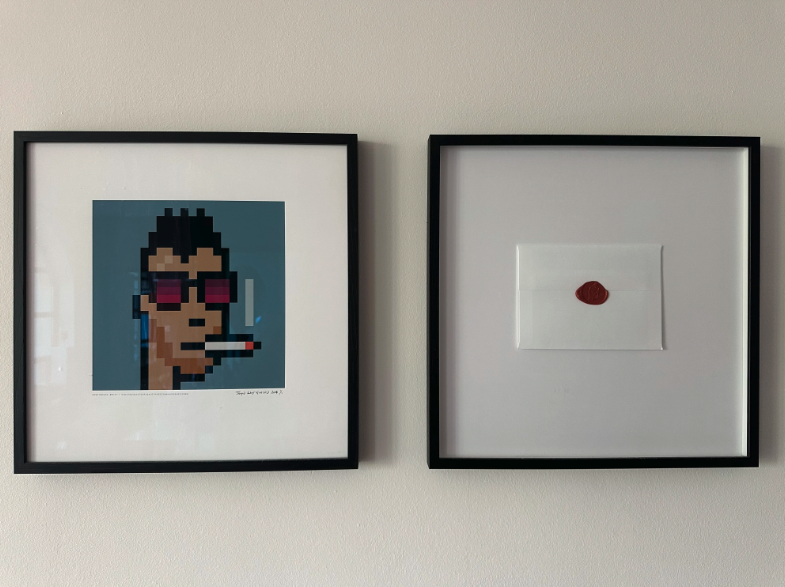
Network and community effects: In some cases, a work’s significance grows through the community that forms around it, as seen with projects like CryptoPunks.
Publicity and visibility: Media exposure has played a role in certain cases, such as Ken Knowlton and Leon Harmon’s Studies in Perception I, which appeared on the cover of The New York Times in 1967.
Technical innovation: Some artists and researchers become foundational not because they created the most aesthetically refined works, but because they introduced new technical possibilities. This includes early pioneers of photography as well as later figures in AI image generation such as Alexander Mordvintsev (DeepDream), Leon Gatys (Neural Style Transfer), Elman Mansimov (AlignDRAW), and Ian Goodfellow (GANs).
Artistic movements and theoretical contribution: Groups and movements, such as Generative Photography or the Algorists, helped establish shared visual languages and ideas. In some cases, artists gain influence through teaching and writing as much as through their own artworks. Casey Reas, co-founder of Processing, is one example.
Many of the works in the exhibition are exceptionally rare on the market today. Some exist only as vintage prints, early plotter drawings, historical editions, obsolete media, websites, or other culturally significant digital formats. As a result, the show offers not only a historical overview but also a rare chance to see and acquire important works from the early history of digital art.
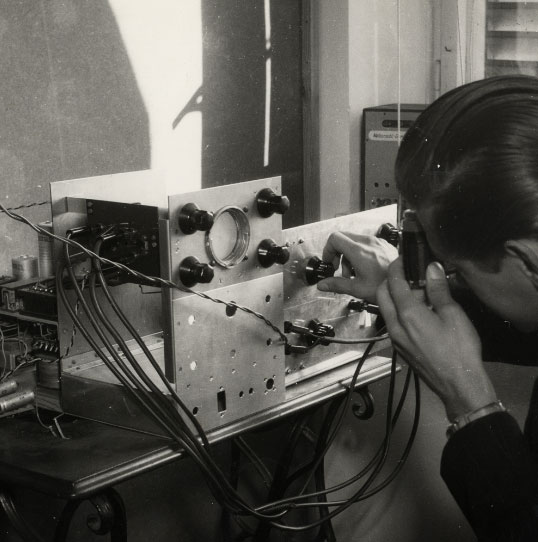
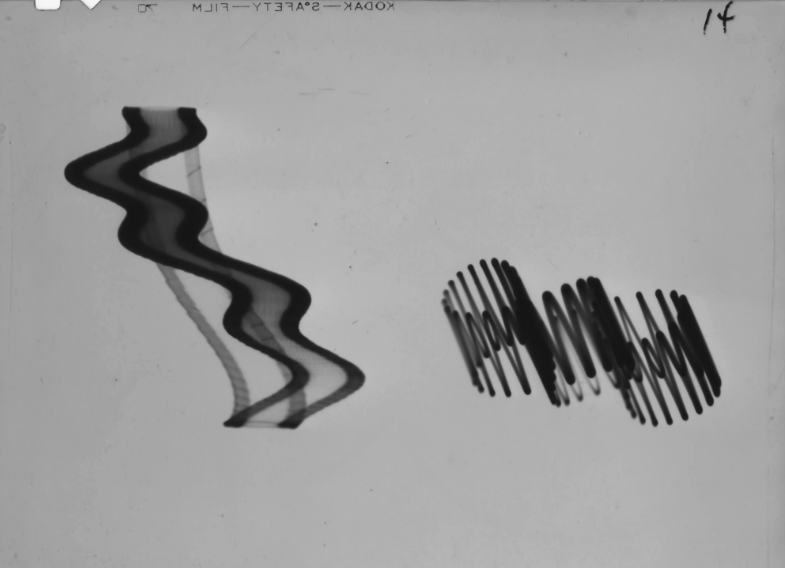
Among the earliest pieces are electronic works by Ben F. Laposky and Mary Ellen Bute, created in the 1950s using oscillographs and cathode-ray tubes. Because these images could not yet be saved as digital files, they survive today only as photographic or filmic records of fleeting electronic signals. These works mark the beginning of a visual history in which the signal, the circuit, and the apparatus themselves became artistic media.
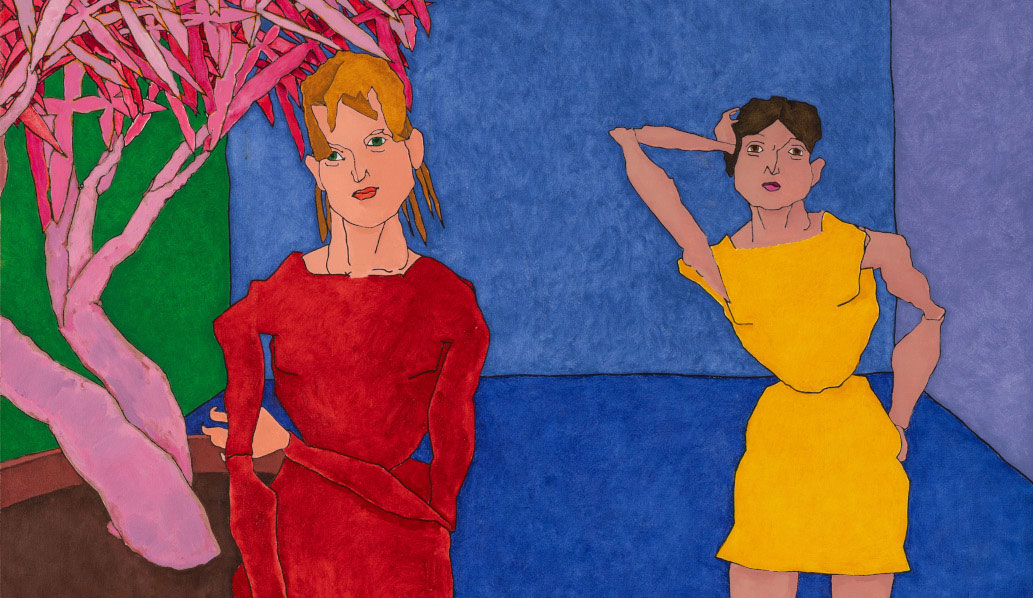
A major focus of the exhibition is early computer art of the 1960s. It includes important works by Frieder Nake, Kenneth C. Knowlton and Leon Harmon, Charles Csuri, and other pioneers associated with landmark exhibitions that helped bring computer art to international attention, such as Cybernetic Serendipity at the ICA in London and Tendencies 4: Computers and Visual Research in Zagreb in 1968. Pieces such as Hommage à Paul Klee, Computer Nude, and Numeric Milling Machine Sculpture are now seen as icons of the moment when the computer first emerged as a tool for image-making, sculptural form-finding, and rule-based artistic systems.
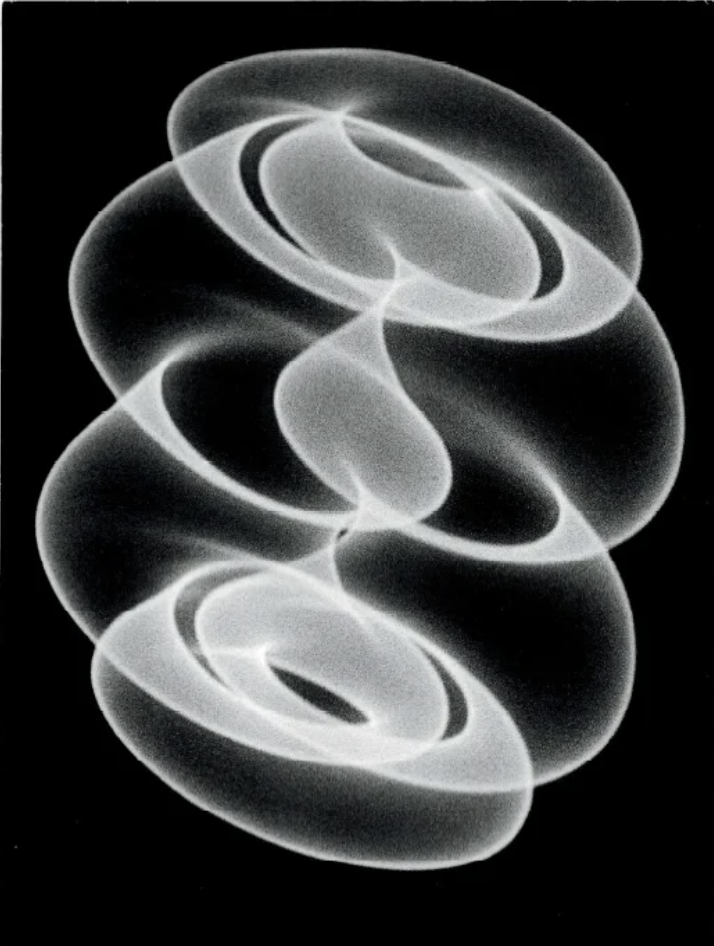
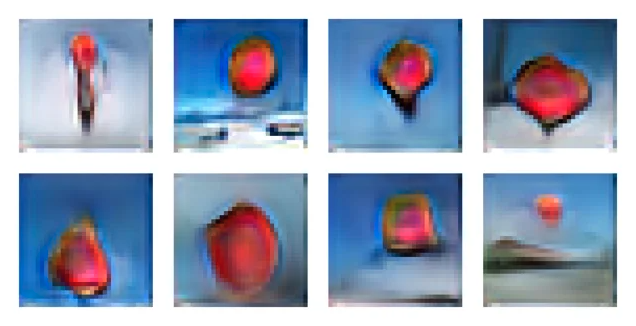
The exhibition also broadens the story with historically significant works by Gottfried Jäger in generative photography. His pieces show that the logic of the program was not limited to computers, but also gave rise to new rule-based approaches within photography itself. A particular emphasis is placed on the recent history of artificial intelligence. Among the works presented is Elman Mansimov’s A red school bus parked in a parking lot from his AlignDRAW series, considered one of the first historically documented AI-generated images created from a text prompt. Moving from the programmed line to the trained model and the blockchain-based token, the exhibition traces how authorship, image, medium, and ownership have been continuously redefined throughout the history of digital art.
By presenting a canonical history of digital art at Art Basel's Basel edition of Zero 10, ArtMeta’s display adds important context and connection between the earliest experiments in computational art and today’s generative and AI-driven practices, emphasising digital art as a continuously evolving artistic tradition. Zero 10 co-curator Trevor Paglen reflected on this intergenerational dimension of Zero 10, explaining: “Looking across the last 50 years of instruction-based and computational work, from postwar experimentalism through today’s generative practices, I see a continuous thread: a body of work that understands the digital as a medium with its own properties, possibilities, and demands. The showcase becomes an intergenerational conversation about what it means to be alive in the digital era, led by artists who were thinking seriously about these questions long before the rest of the world caught up.”
NFT Magazine is a proud media partner of Zero 10, Art Basel's global digital initiative. Free public access to Zero 10 is available until June 19 with advance registration.