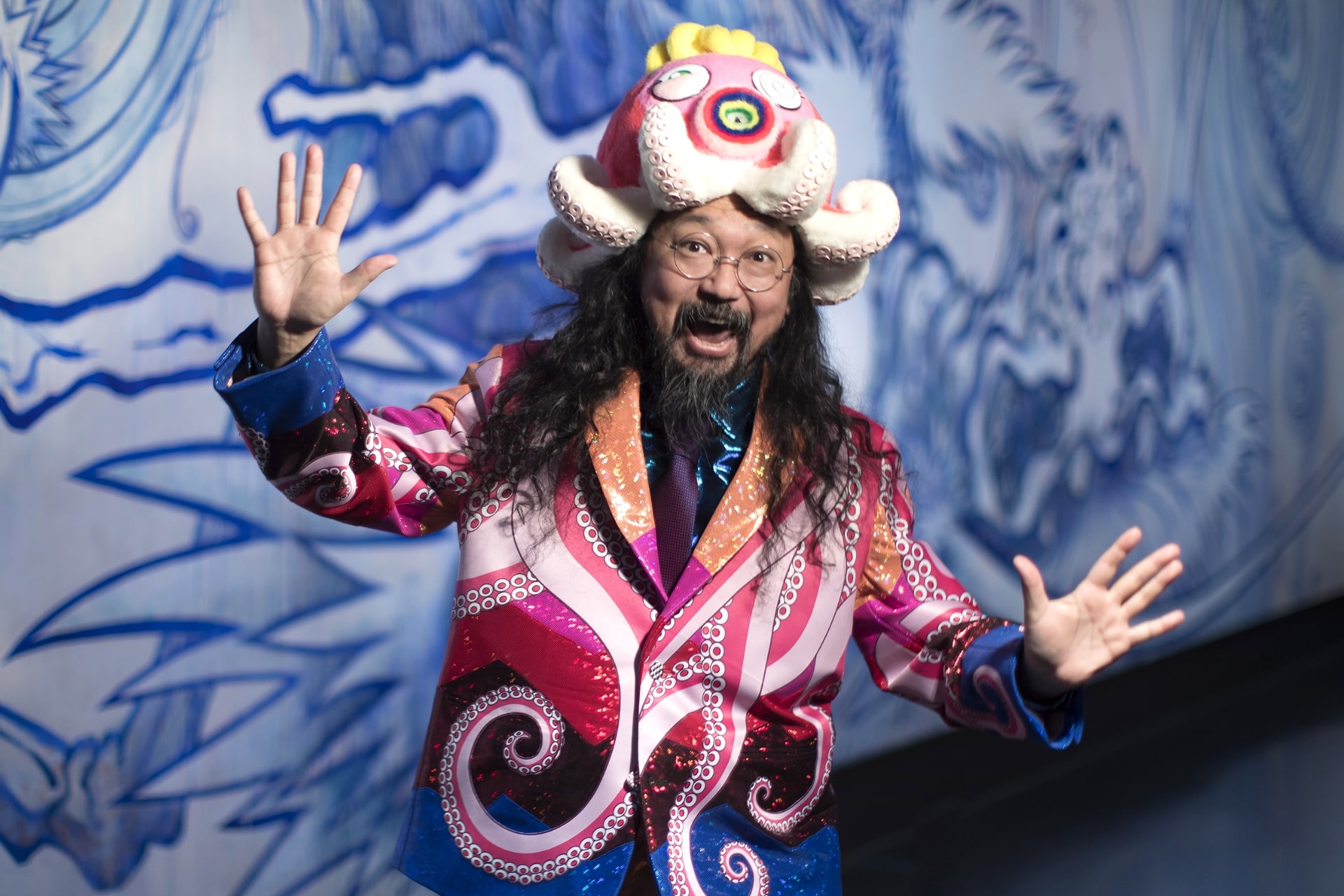
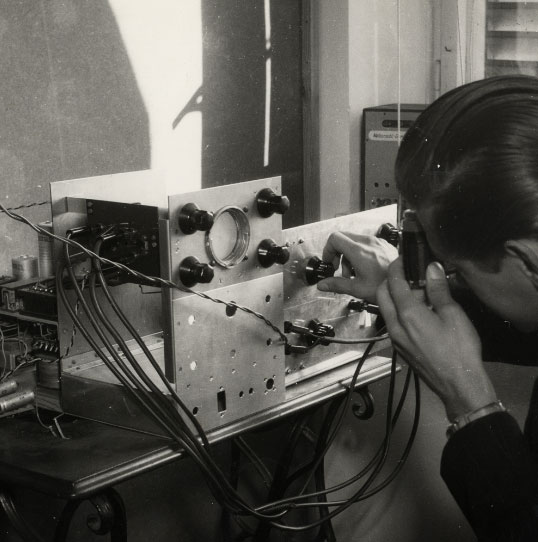
Takashi Murakami is a Japanese contemporary artist renowned for blending traditional Japanese painting (nihonga), sci-fi, anime, and pop culture into vibrant paintings, sculptures, and films featuring his signature repeating motifs and mutating characters. In 2000, he curated the landmark exhibition Superflat, introducing his theory of the same name: it posits a "flat" continuity in Japanese visual culture – from woodblock prints to modern anime, manga, and kawaii aesthetics – shaped by postwar history and the blurring of high art with commercial culture.
Rodni: What made you want to first explore NFTs as a medium for creating digital art?
The main trigger for my interest in NFT art was the high-price sale of Beeple’s work at auction. One of the major themes of my art has always been the relationship between capitalism and art. In that sense, Jeff Koons and Damien Hirst were the artists who broke through the various limits and hurdles ahead of me.
After the Great East Japan Earthquake in 2011, especially the tsunami disaster that claimed tens of thousands of lives, I felt that my mission as an artist should shift away from the art’s relationship with capitalism seen in the works of Hirst and Koons, and instead move toward an exploration of religious and spiritual viewpoints within Japanese society and history. So starting March 2011, I changed direction and began creating work that reflects on religion and Japanese history. But when I saw the Beeple incident, I felt that this was a relationship with capitalism that I myself may legitimately engage with.
The reason is that the digital world, through cryptocurrency, has been questioning capitalism itself. The fact that an event of cryptocurrency entered the world of art commerce through the oldest of its systems, namely auctions, made me decide to enter this field.
Olena: You’ve collaborated with major brands, from Louis Vuitton to toy makers, bringing art into commercial culture. Why did you decide to work at the intersection of art and pop culture?
When you study the expansion, or sometimes even the severing, of the artistic domain, from Marcel Duchamp to Andy Warhol, you naturally come to understand what an artist must do. In other words, an artist is forced to confront the environment in which they were born and raised, and the honesty of their own life, and to speak about themselves from that position. In that sense, as a Japanese person, I cannot engage with art in the same manner as Europeans or Americans. To be “Japanese” in my practice means taking as a premise the historical backdrop that I was born in 1962, 17 years after Japan’s defeat in the Pacific War, and focusing on the extraordinary development of subculture that occurred within that context. I felt that this was my rightful position as a contemporary artist, and so I expressed my stance accordingly.
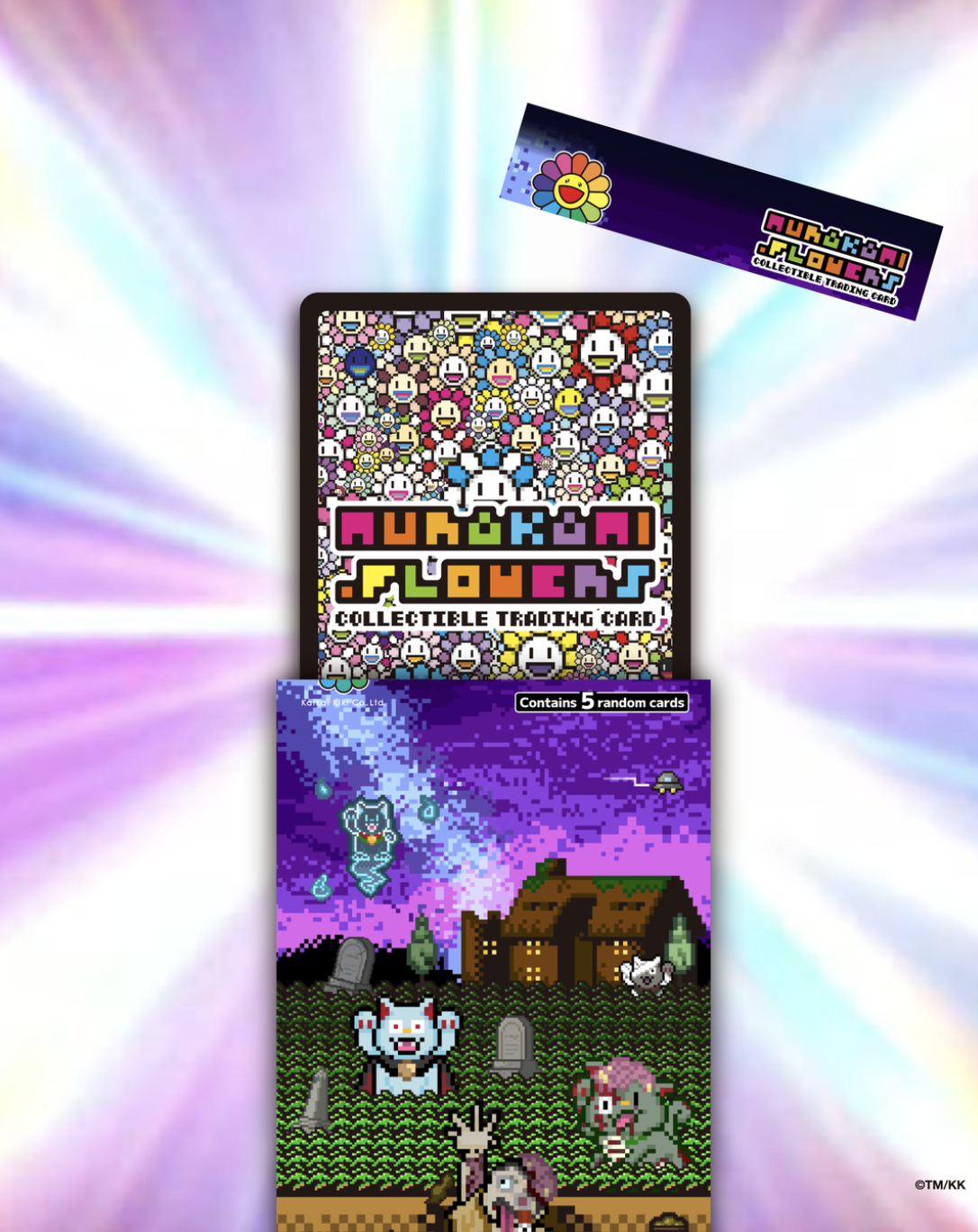
Rodni: I see your NFT trading cards as a fun, accessible extension of the Superflat philosophy, which mixes highbrow Japanese traditions with lowbrow pop culture like consumer collectibles. The core idea being to make fine art feel playful and democratic. Anyone can collect and trade them which blurs the lines between elite art collectors and common hobbyists, while subtly critiquing consumerism. Can you elaborate on your NFT trading card projects and what motivated you to create them? And did you collect anything growing up?
When I was a child, I collected things like rhinoceros beetles and other summer insects, as well as crabs and hermit crabs, but they would all be dead by autumn, so my collection changed every year. Regarding shifting my NFT art into trading cards that you mentioned, although trading cards may originally be a culture that emerged in the United States, when we were children there was the TV series Kamen Rider and there was a huge boom in collecting its cards that were sold together with snacks. My younger brother and I were so obsessed with collecting them that our parents got furious with us. That childhood enthusiasm for collecting is today carried on by things like Pokémon cards and baseball cards, so in a natural way I began thinking about returning to that childhood excitement for collecting.
NFT artworks linked to trading cards are something I would like to continue releasing more of, and I plan to proceed while keeping a close eye on movements in the cryptocurrency market.
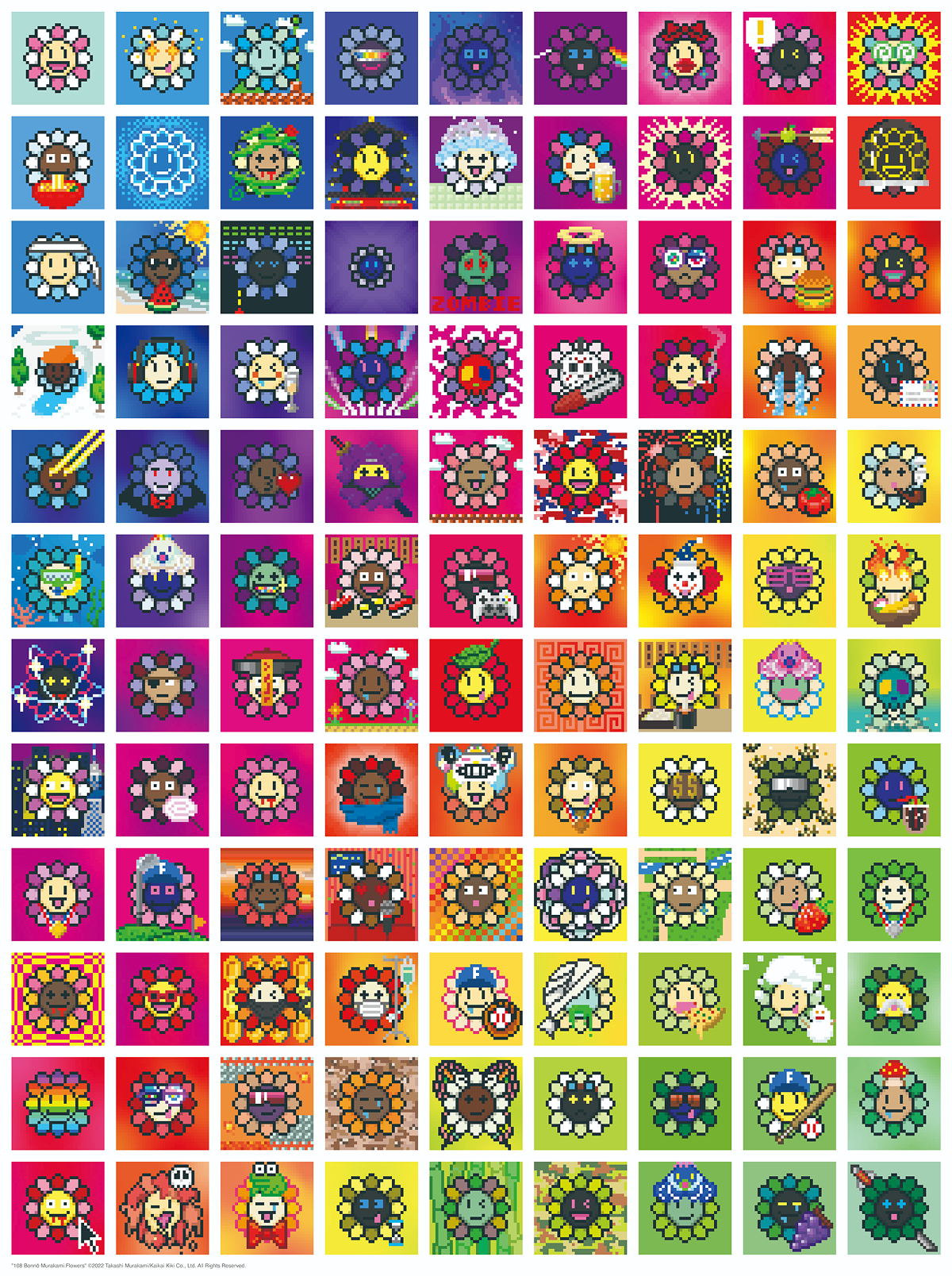
Olena: When you released your first NFT series of Murakami.Flowers, the NFT market was still surrounded by uncertainty and hype. Did you feel any hesitation or sense of risk in taking that step?
As for hesitations, I believed that it was essentially equivalent to issuing a kind of currency or cryptocurrency, so I exercised extreme caution regarding the relationship with national currency principles, tax laws, and so forth in the country where it would be released, and I spent a great deal of time and money working with professionals to thoroughly research and hedge the legal risks in that area. Fortunately, thanks to being able to present artworks visualizing NFT art at Gagosian Gallery, one of the world’s foremost galleries, I was able to explain the concept of NFT art even to old-school art collectors, which I consider very lucky.
Rodni: Your flower motifs, inspired by nature’s fleeting beauty, carry layers of meaning, from Buddhist teachings to postwar trauma and commodified culture – how do you see technology transforming their meaning? Do you see it as a way to preserve nature’s essence in digital eternity? Or a further commodification of nature?
Your questions as the interviewer are extremely insightful and in fact are already stating most of the answers, so I don't really feel there is much for me to add. Especially the first half of this question, I completely agree, as you have articulated exactly my own thoughts. In the end, humans are animals, and we should recognize that many of the frameworks of contemporary society are not permanent but temporary. Within the natural principle that we are simply born and eventually die, all forms of entertainment – collecting, games, and so on – exist within the experiences of joy and suffering. Ultimately, art is a form of expression that materializes such human emotions. Therefore, if I feel something is authentic and real at a given moment, I will participate, and while participating, I would like to turn the imagery I believe in into paintings, sculptures, or videos.
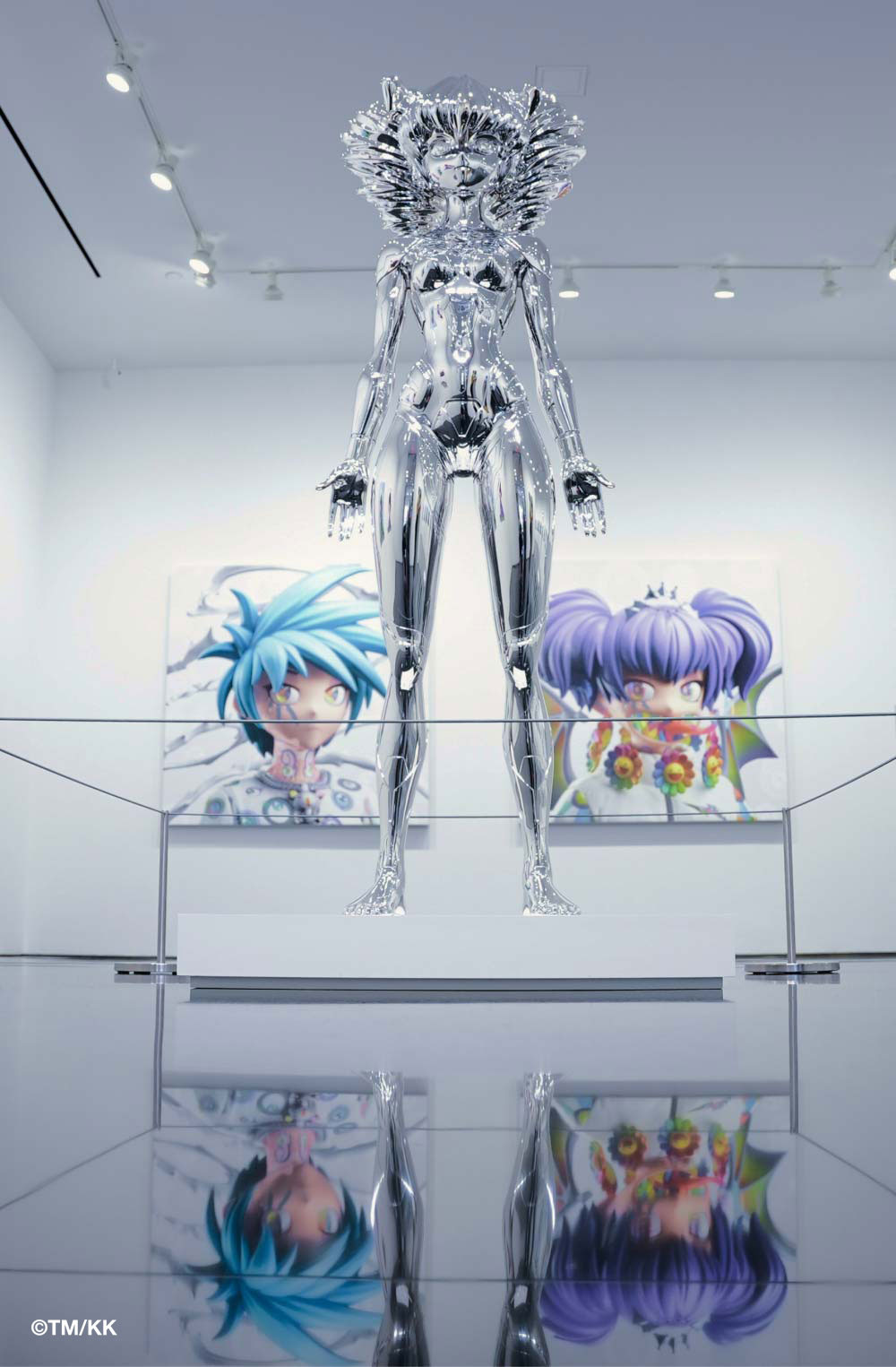
Olena: In your collaboration with RTFKT and the Clone X project, you translated digital avatars into hand-painted portraits and full-scale sculptures. Do you have a preferred medium to work with?
Around the time I first began producing Murakami.Flowers, I also received an invitation from RTFKT. The fusion of sneakers, fashion, and NFTs created by Benoit Pagotto, Steven Vasilev, and Chris Le was so dazzling, and I honestly wondered why they reached out to someone like me, but I felt honored and moved forward with the project. The same was true when collaborating with Louis Vuitton, but my distinctiveness, or advantage, lies in the fact that I am a contemporary artist. So naturally, I consider it my role to combine new genres with contemporary art, which is why I translated the project into sculptures and paintings. As a result, I feel confident that I was able to create a singular point within the history of art.
Olena: You’ve observed that younger generations, raised in gaming worlds and digital spaces, need new formats of artistic experience. What have you learned from engaging with this audience through digital art?
Seeing many children become deeply absorbed in titles like Fortnite, I feel a sense of fear, although I don't claim to fully understand that world myself. The level of immersion – putting on a headset, turning up the volume, and diving into the game so intensely – must place great physical burden on their bodies, which worries me. Within this context, I truly don’t know how far the longing for collectibles or collectability might expand or, conversely, become repressed.
Olena: You’ve said that “by collecting NFTs, you start to unpack and understand the mystery of what the act of collecting art means.” Have you collected any digital artworks or NFTs from other artists yourself?
My largest collection is RTFKT’s Clone X. I spent a great deal of money, cutting deeply into my own finances, in order to actually feel the reality of NFT art for myself. I believed that unless I experienced that feeling firsthand, I would not be able to simulate the collectors’ sense of engagement when releasing my own NFTs. In terms of scale, the amount I spent was astronomical for that time, but even so, because I wanted to truly understand the industry itself, I spent the money.
Rodni: What is your long-term vision and hope for your NFT ecosystem?
I believe 2025 was a period in which NFT art sank deeply. However, when looking at the history of NFT art, you see that such unfavorable situations have actually been the majority, and the moment when it surged in popularity was only brief. The same kinds of rises and falls always occur in the contemporary art world as well, and precisely because the NFT market is currently down, I intend to devote myself all the more to creating new works.
Olena: Finally, what advice would you give to emerging digital artists who may be reading this piece?
My initial impression was that as long as you have the knowledge, NFT art can be made faster than any other kind of artwork and with lower production costs, so the barrier to entry is low. Especially now, when NFT art has dramatically cooled down, I think it is actually an even more favorable time to enter the field. So I encourage you to jump right in and get involved. Thank you very much.