On March 20, My Body Language, a group exhibition curated by Olena Yara, opened at Artverse Gallery in Paris, where it will remain on view until April 3.
The exhibition brings together five artists, Artem Humilevskyi, Lindsay Kokoska, Pauline Faieff, Solimán López, and Zhannet Podobed, creating a contemplative space where the body becomes both subject and storyteller. Each work invites the viewer not only to observe, but to reflect on their own relationship with the body.
The main floor of the gallery is dedicated to physical works.
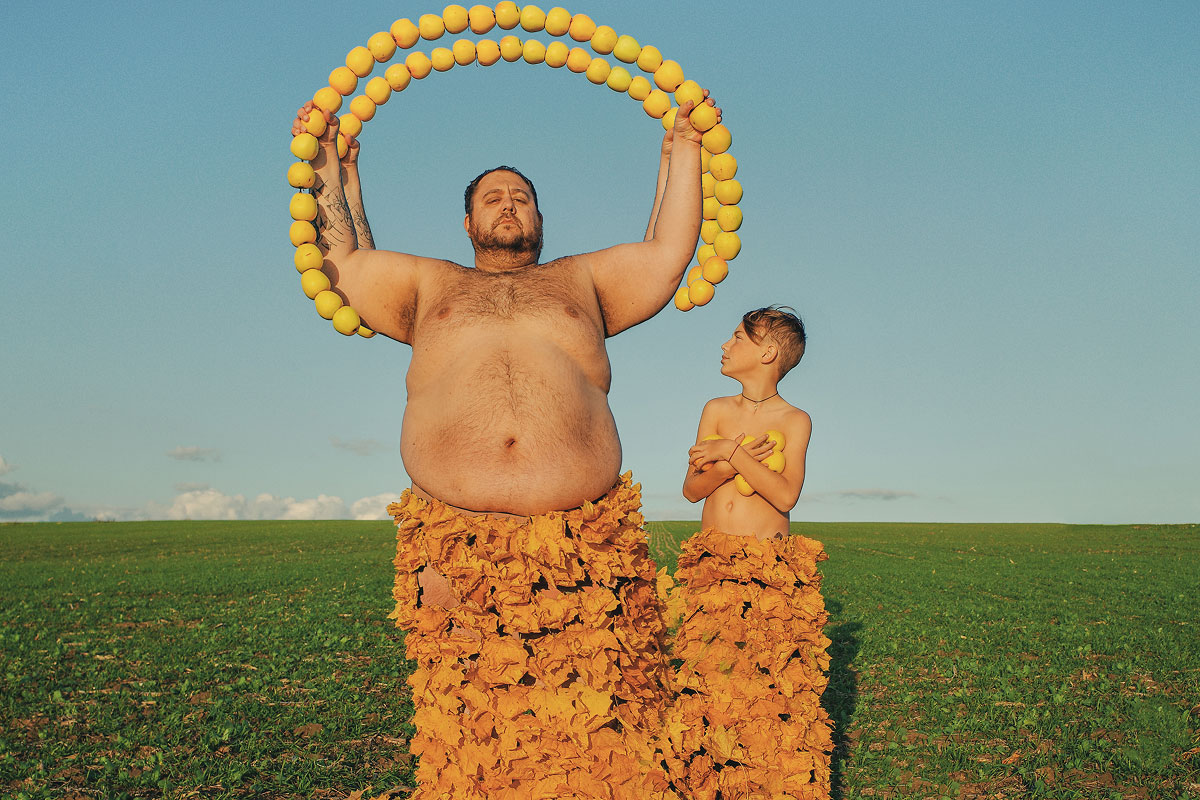
One wall features Artem Humilevskyi’s photographic practice, centered around self-portraiture, often nude. His work Yarilo serves as a symbolic centerpiece of the exhibition. Referencing the Slavic god of spring and renewal, it resonates with the exhibition’s opening date, March 20, marking the beginning of spring in France.
-1.jpg)
Another work, The Apple Tree, depicts Artem alongside his son, exploring themes of inheritance and identity through a poetic and intimate visual metaphor.
Another wall is fully dedicated to Solimán López, a new media conceptual artist working at the intersection of biotechnology, digital systems, and Web3.
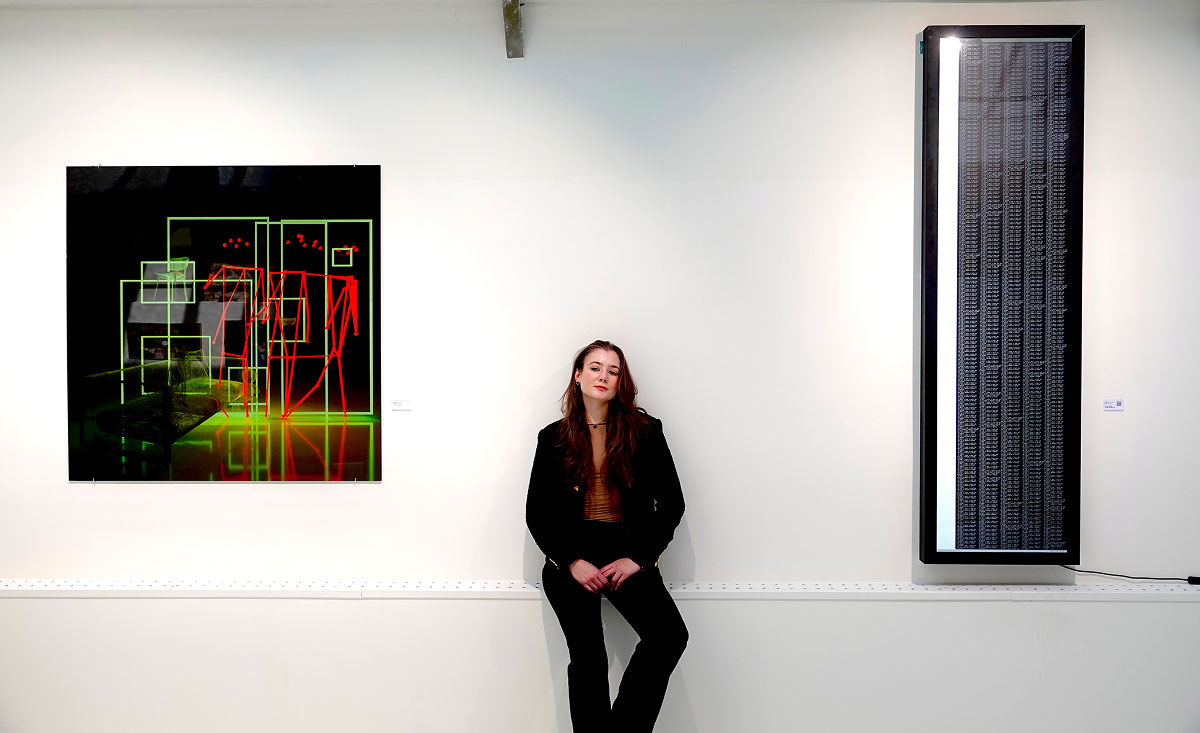
His work Neonumens reflects on the hierarchical nature of social media, where influencers emerge as contemporary digital deities. Through reconstructed Instagram imagery and algorithmically generated environments, López reveals the invisible systems shaping perception, desire, and attention.
In Human 121, a large-scale screen installation presents only 2% of captured data from 125 nude participants. The piece raises questions around digital representation: what does it mean to “reconstruct” a human, and how much data is enough to define identity?
Additional works on the ground floor expand his inquiry into memory, technology, and ecology — from speculative texts on humanity’s future (Manifesto Terrícola), to experiments with DNA, bacteria, and material transformation.
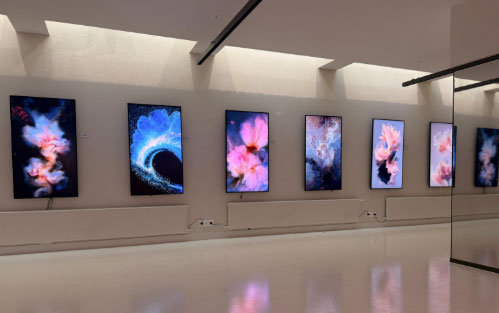
Lindsay Kokoska presents seven works that draw from her long-standing meditation and yoga practice. Blending traditional art, animation, and generative AI, she creates immersive visual environments that invite stillness, inner awareness, and a sense of expanded perception.
Zhannet Podobed presents works from her Sunset Kombucha Series, created at the beginning of the full-scale war in Ukraine. While in Odesa, she found herself observing the quiet, almost meditative movement of the sea, a moment of stillness within uncertainty.
From this experience emerged works such as Radiance, Harmony, Love, and Faith. Her practice explores emotional states, vulnerability, and instinct through abstraction, allowing meaning to remain open and fluid.
Pauline Faieff’s work resists rigid frameworks and labels. Her artistic universe unfolds through intuition, poetry, and a deeply personal exploration of femininity and the body.
Three works from her Frame Series are presented in the exhibition.
At its core, the series asks a simple but disarming question: Will you perceive my body differently if it is framed?
Referencing the long history of classical nudes in art, Faieff confronts the contrast between historical acceptance and contemporary censorship, particularly of female bodies depicted by women.
The mirror frame becomes more than a formal device, it reflects the viewer, blurring the boundary between observer and subject.
Are you framing me, or are you being framed by your own perception?
As part of the opening, visitors were invited to participate in a dance workshop, an intentionally vulnerable and immersive experience.
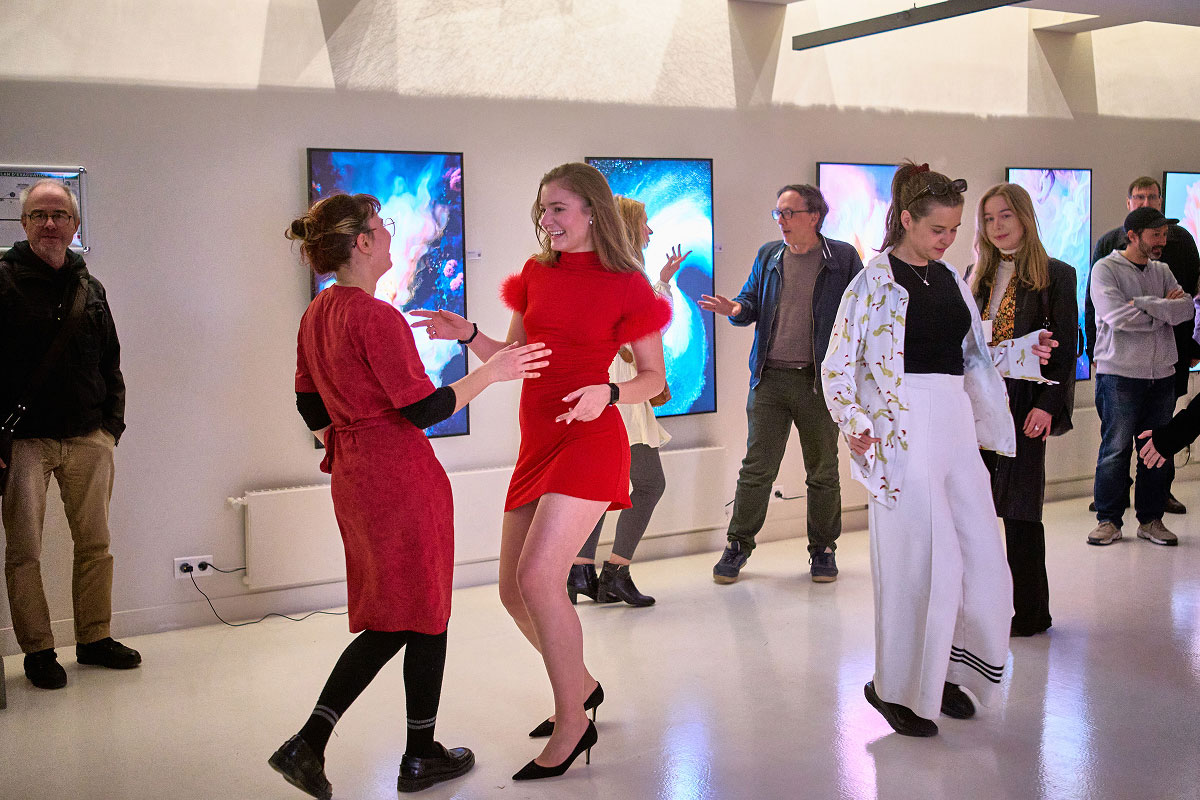
“Including a dancing workshop felt risky. I knew it might make some people uncomfortable. But I’ve always felt that my body can let me down, that it can look awkward or out of place, especially in front of others. This was a way to confront that fear and let the body speak. I’m happy that some visitors allowed themselves to experience what was intended.”
- Olena Yara, curator
On view until April 3 at Artverse Gallery, My Body Language ultimately leaves the viewer with a quiet but persistent question, not just about the bodies presented, but about their own. In this space, the body is no longer something to observe from a distance, but something to feel, confront, and understand.
Olena Yara
Curator
oyara@theyaragency.com