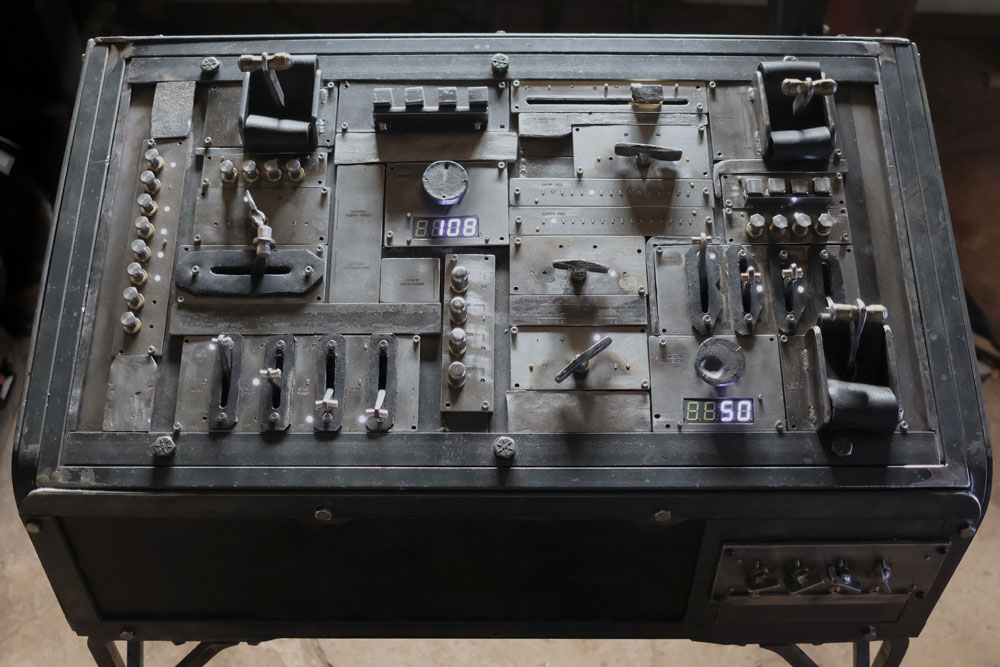
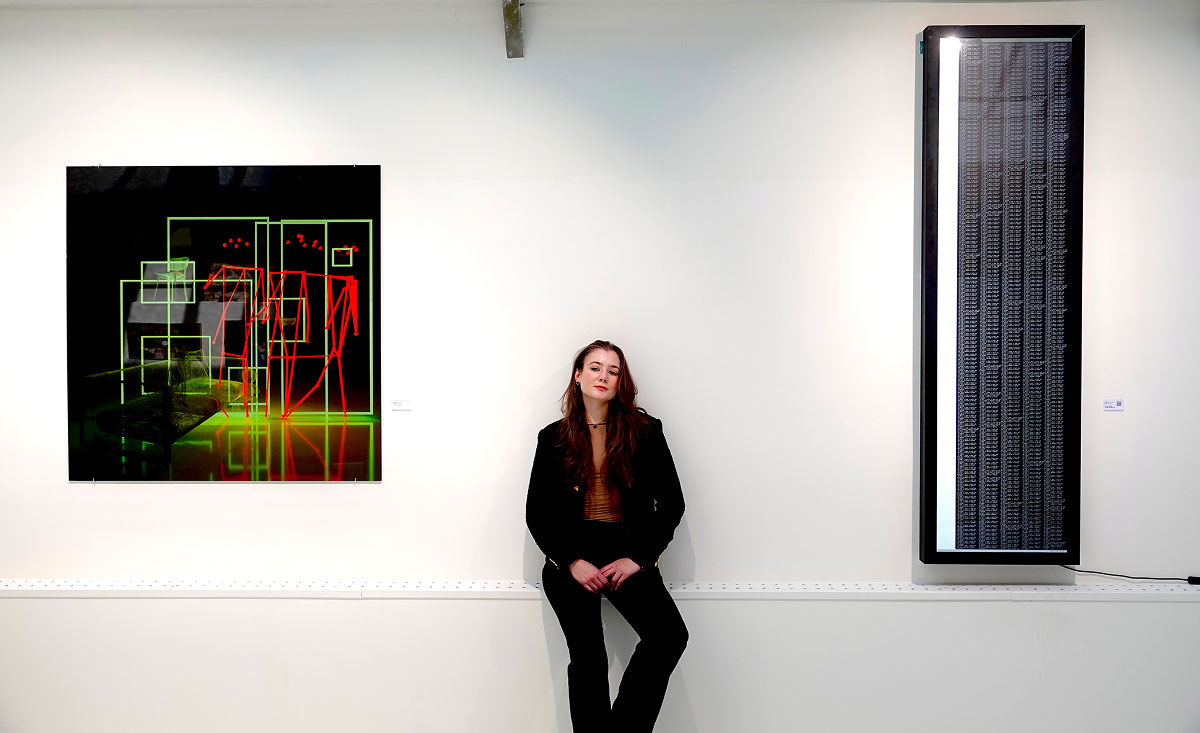
From October 23 to 26, the fourth edition of Art Basel Paris featured 206 galleries, art conversations, and installations across the city. The venue was the Grand Palais, and has been widely praised as the most beautiful setup to date. I decided to write a piece about the digital art I saw there. Obviously, the venue is huge, and I couldn't see it all, so not everything will be covered in this article.
Before I start, I can’t help but let my bachelor’s degree in philosophy take over and ask: “So what’s digital art?”
My personal definition is that digital art is created using digital tools or mediums, such as photography, video, animation, generative algorithms, or digital illustration. It is often displayed through technology like screens, VR headsets, projectors, or interactive installations, though it may also appear in physical forms like prints.
In this article, I’ll follow that definition.
teamLab | Pace Gallery
Pace Gallery presented the art collective, teamLab's work 'Darkness Becomes Existence, an Eternal Sea', which delves into philosophical and existential ideas, questioning the nature of existence.
“The sea gently ebbs and flows in the eternity of time. The black lines are darkness, or the absence of light. However, the lines drawn by the darkness, void of matter or light, appear in front of the light of the sea and continue to flow. The recognition of existence does not involve the presence of objects or light. It is born and shaped in relation to its surroundings.”
Samsung
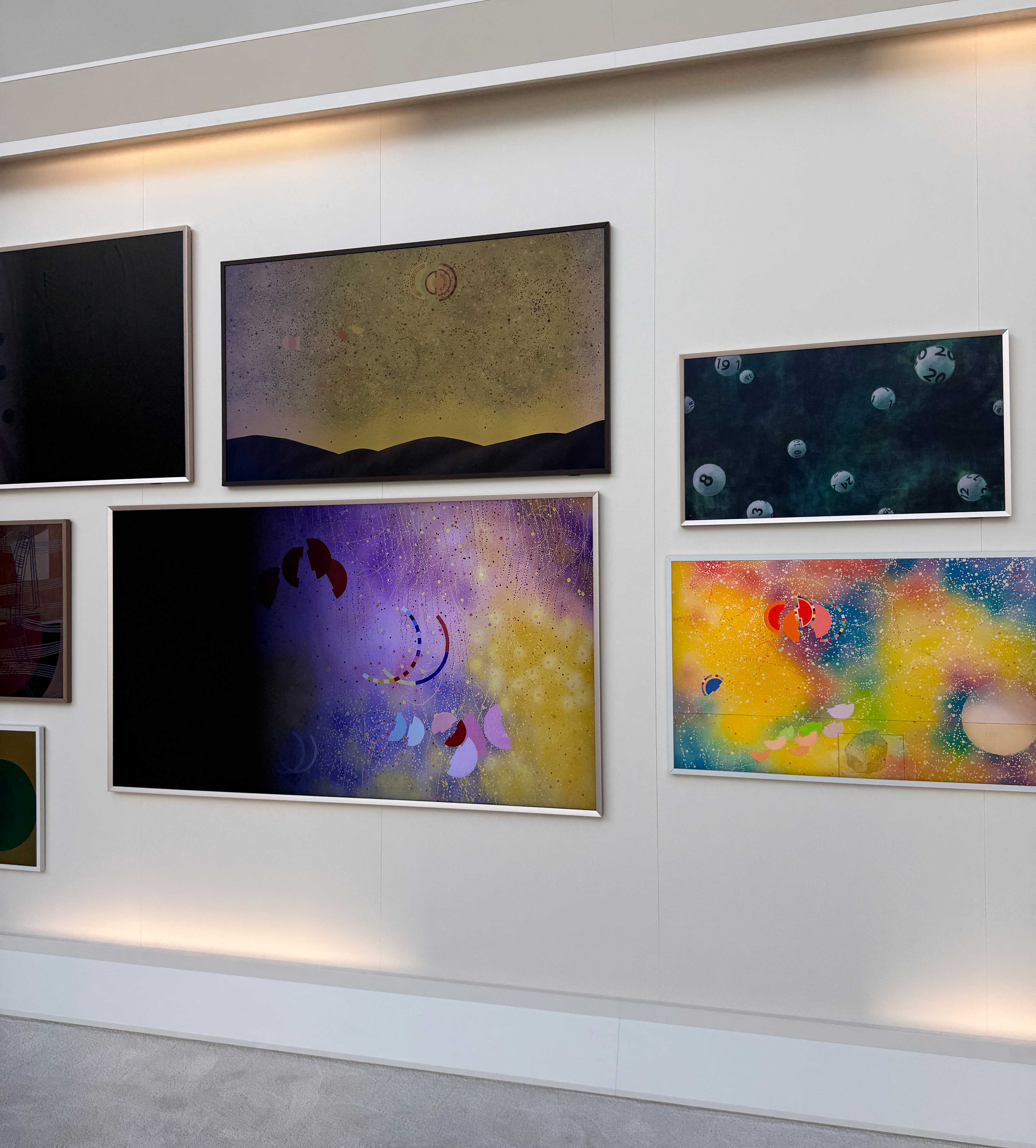
Samsung displayed The Frame, a television that integrates various artworks directly into its display. They’ve collaborated with major art institutions in the past, as well as native digital art platforms such as Sedition.
A Samsung representative at their booth took some time to guide me through this project. The display featured twenty-two artworks, curated in collaboration with Art Basel, displayed through multiple digital frames, beautifully arranged around the booth.
The aim of this collection was to reflect the “now” of global culture, bringing together artists from Africa, Asia, Europe and Latin America, to offer a snapshot of the conversations shaping art in 2025. Included in the line-up were new additions from Tanja Nis-Hansen, Miao Ying, Robert Brambora, Jessy Razafimandimby, and others.
LG

LG also has its own art department. While Samsung was present at Art Basel this year, LG exhibited at Frieze London just a couple of weeks earlier, where they brought new life to Suh Se Ok's work with their state-of-the-art transparent screens.
You can read about our Frieze London and Frieze masters round-up here.
Jasper Marsalis | Emalin Gallery
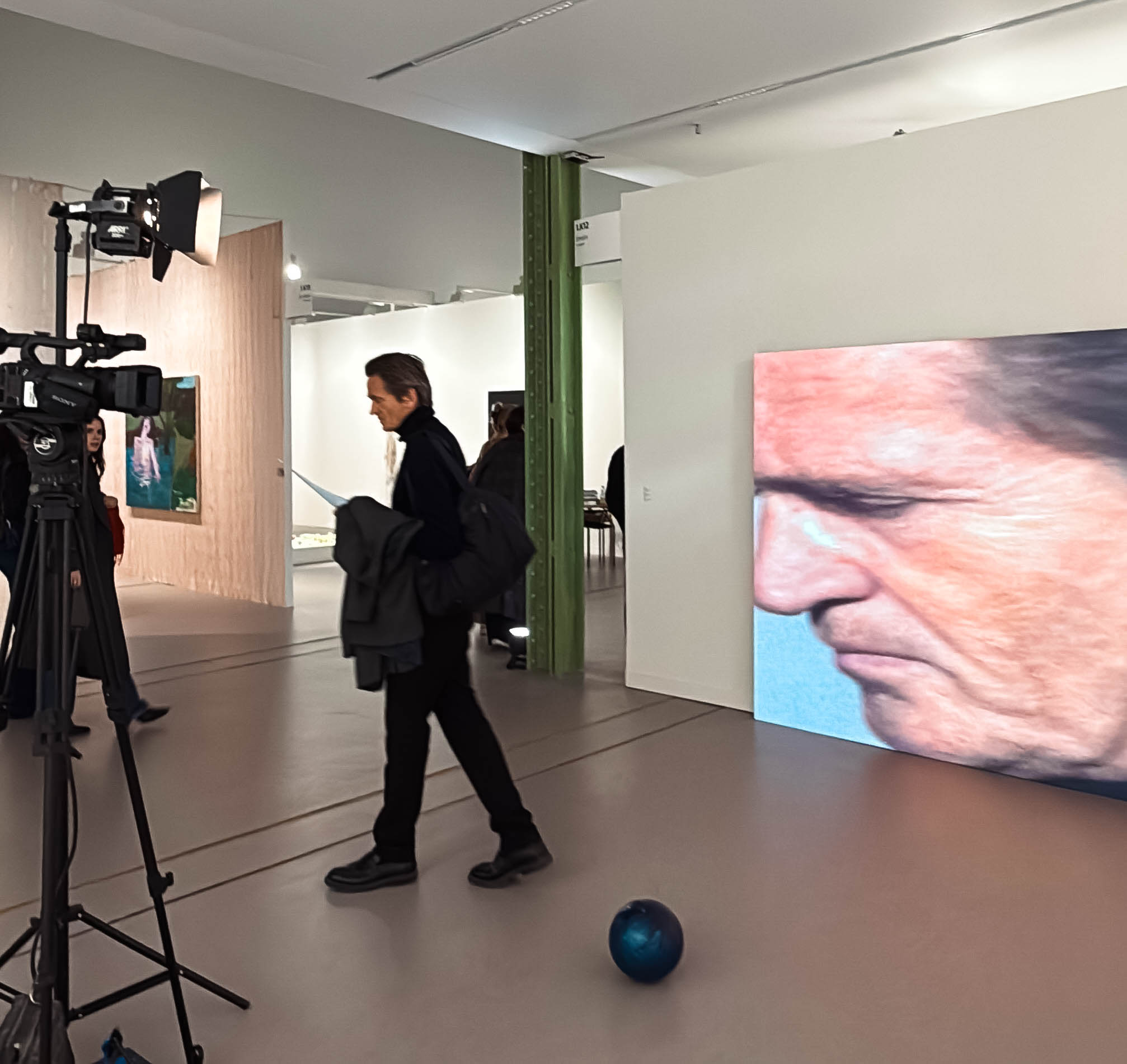
This was my absolute favourite piece at the fair.
I walked by and saw a big screen on the wall with a male face on it, and then realised the same man was standing right in front of it. I walked up and asked, “Are you the artist who created this piece?” He blushed slightly and, in a French accent said, “Better ask him”, pointing at the gallerist. So I did.
The work is as mesmerizing and interactive as it is conceptual. A live video feed transfers from the camera to the screen, motion sensors capture the viewer’s face, and the moment you look away, the camera freezes that exact frame.
See the reel I posted to understand how it works live.
The beauty of the idea lies in how viewers become part of the artwork, shifting from viewing to being viewed. In the picture, you can see Arnauld, a man captured by the camera (and my phone) while the gallerist explained the concept. He kindly agreed to let me use this photo in the article.
Ryoko Aoki | Take Ninagawa Gallery
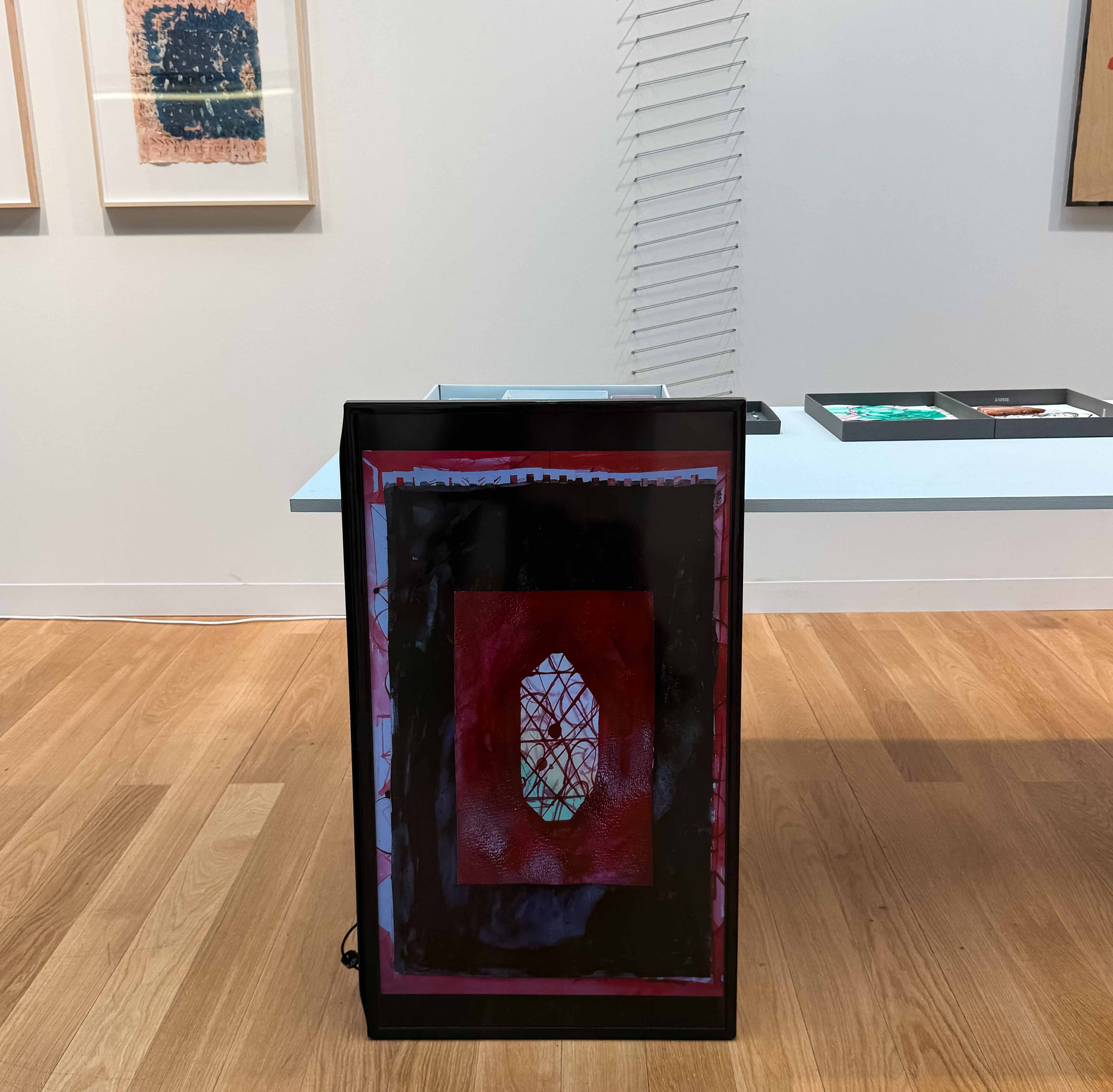
Ryoko Aoki is one of the leading artists in Kyoto’s contemporary scene, known for her multimedia works. Traditionally known for her intricate pencil and felt-tip drawings, Aoki began incorporating digital mediums, particularly animated video installations, to expand her whimsical, dreamlike aesthetic into dynamic, immersive experiences.
Her work ‘I’m in the Dark Now’ was on display in the Grand Palais – I spent some time watching visitors stop in their tracks as the digital frame caught their eye.
Barbara Kruger | Sprüth Magers

A massive screen displayed Barbara Kruger’s Remember Me. And, well, like many other visitors at Art Basel this year, I’ll definitely remember this work. I love her art. It’s bold, memorable, and written in accessible, relevant language that speaks to modern audiences.
Lawrence Abu Hamdan | Sfeir-Semler Gallery
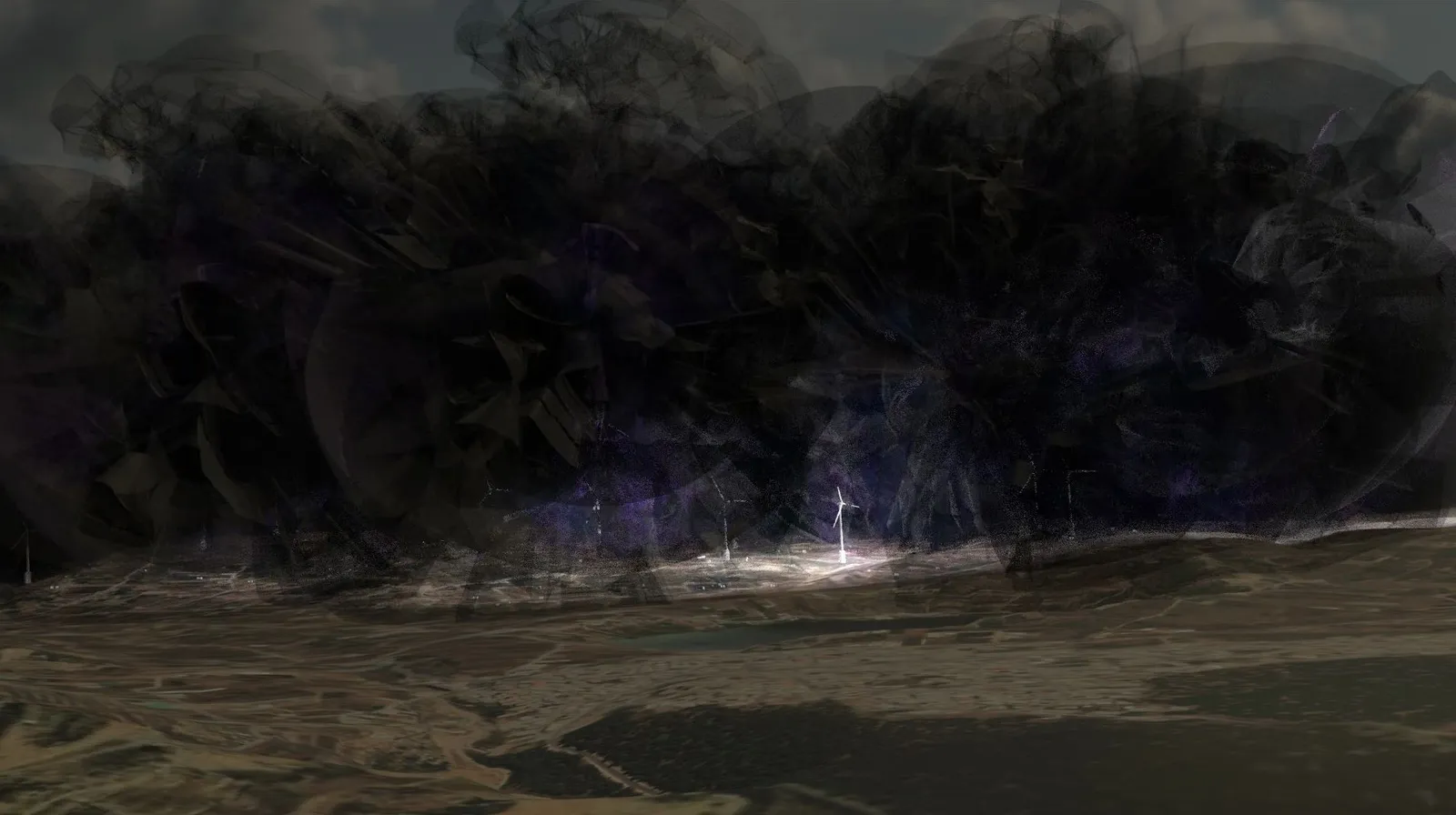
Tilting at Windmills is a powerful work that highlights how an environmental project in the occupied Golan Heights actually caused both environmental and social harm to local inhabitants. As someone with strong sociopolitical views, I believe we should amplify art that speaks up.
Salomon
Yes, the sneaker brand!
Salomon organised a community run for Art Basel Paris and also hosted a corner with an immersive installation. The screen reacted to visitors’ touch and movement. I first saw this type of interactive display at NFC Lisbon, at Rarible’s booth. It was perfectly aligned with the brand: engaging, fun, and tech-forward.
I don’t claim to have covered all the digital art presented at Art Basel Paris 2025, but I’d say I’ve given a pretty good overview of how traditional galleries, artists, and brands are using technology to create new experiences and communicate the ideas.
I still feel that Art Basel (and traditional institutions in general) have more resources to execute digital art installations than purely digital art companies, which usually operate on smaller budgets.
I’m also convinced that art-and-tech collaborations capture attention faster than a traditional oil painting ever could. But does that also mean they sell as well as they attract? I’m not sure. The average collector might not be ready to hang a digital frame at home just yet.
In any case, Art Basel Paris managed to show me the digital art. And if they did, there must good reason behind it.